How Long Do Plastic Injection Molds Last? Lifespan Factors & Maintenance Guide
Justin Brown
October 30th, 2025
A poorly maintained injection mold can fail after just 10,000 cycles—while a Class 101 tool built for high-volume production regularly exceeds 1 million cycles. The difference isn’t luck; it’s design, material quality, and proactive maintenance.
When you’re quoted $15,000 for an injection mold, one of the first questions should be: “How many parts will this produce before I need a replacement?” Understanding plastic injection molding lifespan helps you calculate true per-part costs and avoid mid-production surprises.
This guide breaks down the factors that determine how long plastic injection molds last, from SPI classifications to maintenance schedules, so you can make smarter tooling decisions. We’ll cover industry-standard lifespan benchmarks, the biggest factors affecting mold durability, common defects that signal wear, and proven strategies to extend tool life—plus when to plan for replacement.
What Determines Injection Mold Lifespan? (SPI Classifications Explained
The Society of the Plastics Industry created a classification system that defines expected mold performance based on construction quality and intended use. Understanding these classes helps you evaluate vendor quotes and match tooling investment to your production volume.
Class 101 molds are built for mass production. They use hardened steel construction and deliver 1,000,000+ cycles. You’ll find these tools in automotive, consumer electronics, and medical device manufacturing where annual volumes reach millions of parts. The upfront cost is higher, but the per-part tooling expense drops to pennies.
Class 102 molds serve production-grade needs with 500,000 to 1,000,000 cycles. These tools balance durability with reasonable lead times. Class 102 tooling serves clients who need reliable performance across multi-year production schedules without the investment required for Class 101.
Class 103 molds handle medium-volume runs between 100,000 and 500,000 cycles. They work well for established products with steady demand or seasonal items that run in batches. The steel quality is adequate for repeated use, though not hardened to Class 101 specifications.
Class 104 molds fit short-run scenarios—10,000 to 100,000 cycles. These tools often use aluminum construction, which machines faster and costs 40-50% less than steel. The tradeoff is durability. Aluminum molds work for product launches, market testing, or limited-edition runs where you need parts quickly without committing to long-term tooling.
Class 105 molds are prototype tools. They produce 500 to 10,000 cycles, just enough for design validation, focus groups, or initial customer samples. Construction prioritizes speed over longevity.
When choosing a class, calculate your total anticipated volume and add 20% buffer. A project requiring 300,000 parts over three years needs Class 103 minimum. Underestimating volume leads to mid-production mold failure and expensive delays.
5 Factors That Affect Plastic Injection Mold Durability
Even within the same SPI class, two molds can have drastically different lifespans. These five factors explain why some tools exceed expectations while others fail prematurely.
Mold material quality
Steel alloy selection determines baseline durability. P20 steel comes pre-hardened to 30-36 HRC and reaches mid-40s HRC after heat treatment. It handles moderate production volumes reliably. H13 steel offers 48-52 HRC hardness and suits applications requiring 800,000 to 1 million cycles. S7 steel reaches up to 56 HRC—the highest hardness rating used in injection molding. Each step up in hardness extends tool life but increases machining time and cost.
Aluminum molds machine quickly and cost significantly less than steel. They work well for Class 104 and 105 applications. The softer material wears faster under repeated injection pressure and heat cycling. Choose aluminum when speed and budget matter more than cycle count.
Mold design
Gate location affects how molten plastic flows into the cavity. Poor placement creates turbulence that erodes steel over thousands of cycles. Cooling channel efficiency determines how quickly heat dissipates. Inadequate cooling extends cycle times and subjects mold surfaces to prolonged thermal stress. Draft angles allow parts to eject cleanly. Insufficient draft forces ejector pins to work harder, accelerating wear on both pins and core surfaces.
Reviewing gate and cooling designs during the planning phase prevents durability problems that would cost thousands to fix later.
Operating environment
Temperature extremes stress mold components. High barrel temperatures required for engineering resins like polycarbonate increase thermal cycling damage. Humidity promotes rust on unprotected steel surfaces during storage. Corrosive resins—particularly flame-retardant additives—attack mold steel chemically over time.
Glass-filled nylon and similar reinforced materials are highly abrasive. The glass fibers act like sandpaper against mold surfaces. These materials can reduce mold life by 30-50% compared to unreinforced resins. If your application requires glass-filled materials, plan for more frequent mold refurbishment or choose harder steel alloys upfront.
Maintenance frequency
Cleaning schedules directly impact tool longevity. Resin residue left in cavities between runs hardens and creates surface defects. Dried material requires aggressive removal that damages polished finishes. Lubrication keeps slides and ejector pins moving smoothly. Skipped lubrication leads to galling and seizing.
Inspection intervals catch problems early. A worn gate identified at 50,000 cycles costs a few hundred dollars to repair. The same gate left unaddressed until 150,000 cycles may require core replacement at ten times the cost.
Cycle parameters
Injection pressure, clamp force, and barrel temperature settings affect how hard molds work during each cycle. Excessive injection pressure to compensate for poor gate design hammers cavity surfaces. Clamp force set too high stresses parting lines. Running barrel temperatures at the high end of material specifications accelerates thermal degradation.
Working with your injection molding partner to find optimized settings produces good parts without pushing molds beyond their design limits.
Common Injection Molding Defects That Signal Mold Wear
Visual defects in molded parts tell you when a mold needs attention. Catching these warning signs early lets you schedule maintenance during planned downtime instead of dealing with emergency repairs mid-production.
Flash
Excess material appears along the parting line where mold halves meet. Flash indicates worn mold surfaces that no longer seal tightly or insufficient clamp force to hold halves together under injection pressure. Over thousands of cycles, repeated opening and closing erodes parting line surfaces. Contaminants trapped between halves accelerate the wear. Minor flash may respond to increased clamp force. Persistent flash requires parting line resurfacing.
Sink marks
Depressions form on part surfaces, usually opposite thick sections or ribs. Sink marks develop when material cools unevenly or gates wear and can’t deliver adequate plastic to fill thick areas. Worn gates restrict flow and prevent proper packing pressure. The material shrinks as it cools, creating visible depressions. Gate repair or replacement typically solves the problem.
Flow lines
Stress patterns appear as wavy lines or streaks on part surfaces. These lines show where molten plastic flowed at different rates or temperatures. Degraded cooling channels that no longer dissipate heat evenly cause temperature variations in the melt. Worn or partially blocked gates create turbulent flow. Flow lines that appear suddenly after thousands of good cycles suggest cooling channel buildup or gate erosion.
Burn marks
Black or brown discoloration appears near edges or in corners. Trapped air heated by compression ignites trace volatiles in the plastic. Burn marks indicate blocked or degraded vents. Carbon buildup in vent channels restricts air escape over time. Cleaning or re-cutting vent channels removes the carbon deposits and restores proper venting.
Surface delamination
Thin layers of material separate from the part surface, creating a flaky appearance. Delamination happens when incompatible materials contact the mold surface or when contamination prevents proper adhesion. Mold release agents that accumulate in textured surfaces or residue from previous resin types cause this defect. Thorough cleaning usually corrects the issue. Persistent delamination may require mold surface refinishing.
Minor defects caught early often need simple repairs—cleaned vents, replaced pins, or recut gates. These fixes take days and cost a fraction of new tooling. Defects ignored until they affect every part force you to choose between expensive core replacement or complete mold reconstruction.
How to Extend Injection Mold Life: Maintenance Best Practices
Preventive maintenance adds years to tool life and protects your production schedule. These practices maximize your tooling investment and reduce the chance of mid-run failures.
Remove resin residue after each production run. Plastic left in cavities hardens and becomes difficult to remove without damaging polished surfaces. Use brass brushes or plastic scrapers on delicate areas. Avoid steel tools that scratch mirror finishes. Mild solvents help dissolve stubborn residue without attacking mold steel.
Lubricate moving components regularly. Apply mold release agents to slides, lifters, and ejector pins according to resin type and cycle frequency. Parts running abrasive materials need more frequent lubrication. Dry components bind and gall, creating damage that spreads with each cycle. Keep a log of when you last lubricated each mold.
Inspect molds every 5,000 to 10,000 cycles. Visual checks catch early wear before it affects part quality. Look for discoloration around gates, scratches on cavity surfaces, and carbon buildup in vents. Check ejector pins for bending or mushrooming. Measure critical dimensions at regular intervals to track gradual changes.
Store molds in climate-controlled conditions. Temperature and humidity swings promote rust on steel surfaces. Coat mold faces with rust preventive before storage. Molds stored properly in climate-controlled facilities maintain sharp edges and polished finishes even after months between runs. Molds stored in damp warehouses develop pitting that requires expensive refinishing.
Consider surface treatments for demanding applications. Nitriding creates a hardened case on mold steel that resists wear and abrasion. The process diffuses nitrogen into the surface, forming a layer significantly harder than the base material. Chrome plating adds corrosion resistance and reduces friction. Both treatments help molds reach the upper end of their rated cycle life.
Surface treatments work best when applied to new or recently refurbished molds. Adding them to heavily worn tools provides limited benefit since the protective layer only extends a short distance into the steel.
Clean cooling channels annually. Mineral deposits from cooling water build up inside channels and reduce heat transfer efficiency. Reduced cooling forces longer cycle times and subjects mold surfaces to extra heat exposure. Chemical cleaning or high-pressure flushing removes deposits and restores cooling performance.
Document all maintenance activities. Record cleaning dates, parts replaced, adjustments made, and cycle counts at each service interval. Documentation helps you predict when components will need attention and provides data for planning future projects. Detailed records also help diagnose problems by showing when symptoms first appeared relative to maintenance events.
Maintenance costs money and takes time. The investment pays for itself by preventing production delays and extending the interval between major repairs. A mold that runs 400,000 cycles instead of 300,000 reduces your per-part tooling cost by 25%.
When to Repair vs. Replace Your Injection Mold
Every mold eventually reaches a point where you must decide between investing in repairs or purchasing new tooling. Understanding the decision criteria protects your budget and production timeline.
Repair makes sense for contained problems. Worn ejector pins, damaged gates, minor surface scratches, and clogged vents typically cost less than 30% of original mold value to fix. These repairs take days to a couple of weeks depending on part availability and machine shop workload. A $12,000 mold with worn ejector pins might need $800 in parts and labor—an easy decision when the tool still has 100,000 cycles of life remaining.
Gate replacement is one of the most common repairs. Gates erode from repeated exposure to high-pressure molten plastic. Cutting a new gate or installing a replaceable gate insert costs a fraction of new tooling and restores proper flow characteristics. Replaceable gate inserts work well for molds running abrasive materials since they allow quick swaps without major disassembly.
Replacement becomes necessary when structural integrity fails. Cracked cores or cavities cannot be reliably repaired. The cracks propagate with each thermal cycle and eventually cause catastrophic failure. Warped parting lines that prevent proper sealing require extensive machining to restore flatness. The labor cost often exceeds building new tooling with updated design improvements.
Molds that have exceeded 80% of their rated cycle life deserve careful evaluation even if they still produce acceptable parts. A Class 103 mold approaching 400,000 cycles has limited remaining life. Investing $3,000 in repairs might only buy you 50,000 more cycles before another failure occurs. That same $3,000 could go toward new tooling that delivers 100,000+ fresh cycles.
Calculate total cost of ownership. Add repair costs to downtime losses and remaining expected cycles. Compare that figure to new mold cost divided by full rated cycle life. If repair cost per cycle exceeds 150% of new tooling cost per cycle, replacement usually makes more financial sense.
Consider lead times in your decision. Simple repairs happen in days. Complex repairs requiring EDM work or precision grinding can take two to four weeks. New molds take four to twelve weeks depending on complexity and shop workload. Simple single-cavity molds might be ready in four to six weeks. Complex multi-cavity tools with sophisticated cooling and side actions can require three months or more.
Working with a Logan injection molding partner reduces shipping time and costs for both repairs and new builds. Visiting a local facility lets you inspect work in progress and request adjustments before final assembly. Long-distance mold repairs add shipping delays at both ends and increase the risk of damage in transit.
Plan proactively when possible. Don’t wait until a mold fails to start thinking about replacement. When a tool reaches 60-70% of rated life, begin budgeting for new tooling. Get quotes, finalize any design improvements, and schedule the build so new molds arrive before old ones fail. This approach prevents production gaps and lets you transition on your schedule instead of responding to emergencies.
Some clients choose to repair molds strategically to bridge short gaps—keeping an aging tool running for six months while new tooling is being built, for example. This works when you have a clear end date and the repair cost is minimal.
Conclusion
Plastic injection mold lifespan depends on SPI classification, material selection, and how well you maintain the tool. A Class 101 steel mold with proper care can deliver over a million cycles. A Class 104 aluminum tool might serve you well for 50,000 parts before requiring replacement. Neither choice is wrong—they fit different production scenarios.
Calculate your per-part tooling cost using realistic cycle life estimates. A $20,000 mold that produces 500,000 parts costs $0.04 per piece. A $8,000 mold that only reaches 100,000 parts costs $0.08 per piece despite the lower upfront investment. Factor in maintenance, potential repairs, and your production timeline to understand true tooling expenses.
Ready to start your next project with durable, locally-built tooling? Contact our Logan team to discuss custom plastic injection molding solutions for your volume requirements.
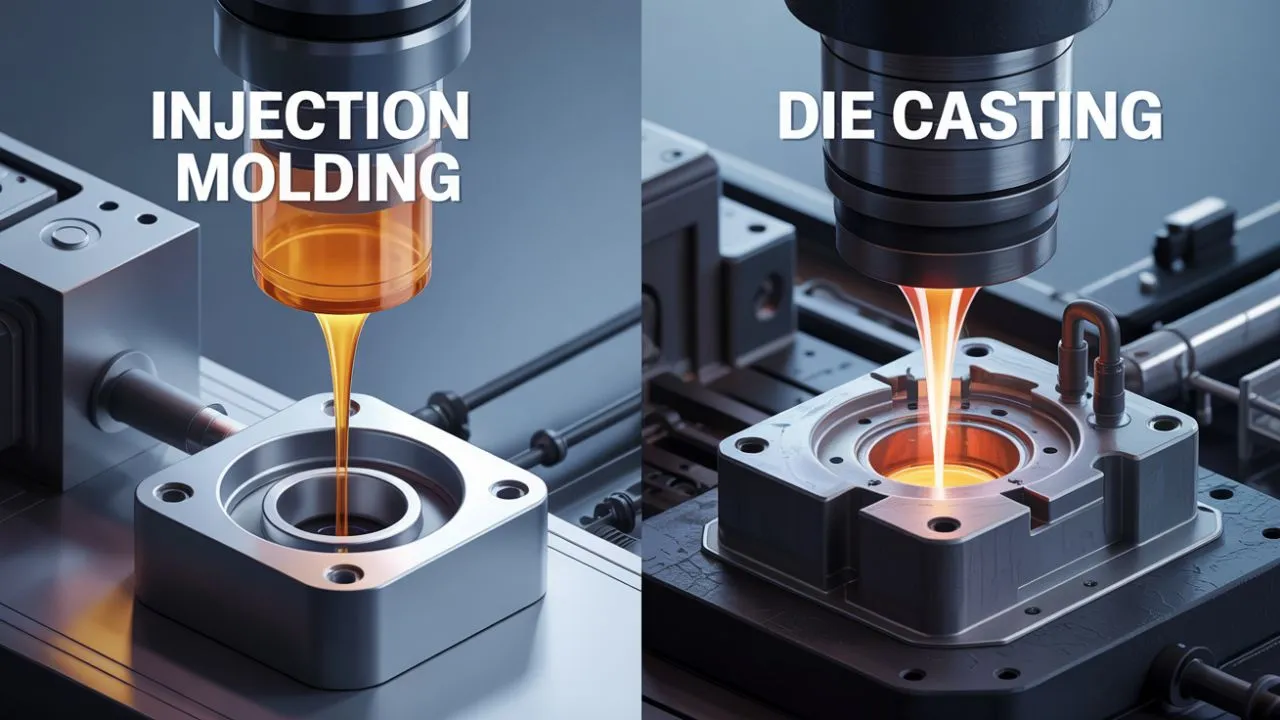
Should your part be plastic or metal? That question decides whether you need injection molding or die casting. Both processes push melted material into a mold under pressure. From across…
Is it cheaper to build your mold overseas or here at home? The honest answer depends on what you actually count. Many buyers compare domestic vs overseas injection molding using…
You have a part to make. Someone mentioned CNC turning or CNC milling. Maybe both came up. They sound alike, but they are not the same process. Picking the wrong…
You’ve probably seen the letters “ISO 9001:2015” on a badge or a website. It might look like just another logo. But it means something specific. ISO 9001:2015 certification tells you…
If you’ve gotten quotes from two injection molding companies, you may have noticed something. One mentions a hydraulic machine. The other mentions an electric machine. You might wonder if that…
Combining metal with plastic takes a different process than adding a soft grip to a hard plastic part. Both are common in insert molding and overmolding, but they solve different…
Not all injection molds are built the same way. At Freeform Polymers, we’ve seen how the type your part needs can change your tooling cost by thousands of dollars. That…
Ever gotten a design review back with a flag that says “insufficient draft”? You had no idea what that meant. It’s one of the most common notes molders give on…