Is Plastic Molding Expensive? Real Costs Broken Down Simply
Justin Brown
December 4th, 2025
You have a product idea. You know plastic molding can bring it to life. But one question keeps coming up: Can I actually afford this?
The truth is, plastic molding costs vary a lot. A mold can run anywhere from $1,000 to over $100,000. That range confuses many first-time buyers. But once you understand what drives the price, budgeting gets much easier.
This guide breaks down plastic molding costs in plain terms. You’ll learn exactly what affects price and how to plan your budget. We’ll cover the main cost factors. We’ll explain when molding makes financial sense. And we’ll share ways to keep your project affordable.
Is Plastic Molding Expensive?
Plastic molding costs depend on your project. For small runs, it can seem expensive. That’s because mold creation costs more upfront. But for large runs, the cost per part drops fast. It often falls to just cents each.
Main cost factors include:
Mold complexity (simple vs. multi-cavity)
Material type (commodity vs. engineering-grade plastic)
Part size and design details
Order volume
For high-volume production, plastic molding is one of the most cost-effective methods available.
What Makes Plastic Molding Seem Expensive?
The upfront mold cost surprises most first-time buyers. Tooling is a big investment before a single part gets made. That sticker shock is real. But it tells only part of the story.
Here’s what many people miss: you pay for the mold once. Then it makes thousands of parts. The cost spreads across every piece produced. A $10,000 mold making 10,000 parts adds just $1 to each unit.
Compare that to 3D printing. There’s no tooling fee. But each part costs the same whether you make one or one thousand. At low volumes, 3D printing wins. At high volumes, molding pulls ahead fast.
We see this often at Freeform Polymers. A client gets their first quote and pauses at the tooling line. Then they see the per-part price at volume. The math clicks. Plastic molding rewards scale like few other methods can.
The Four Main Plastic Molding Cost Factors
Understanding where your money goes helps you plan better. Four main factors shape your final price.
Mold and Tooling Costs
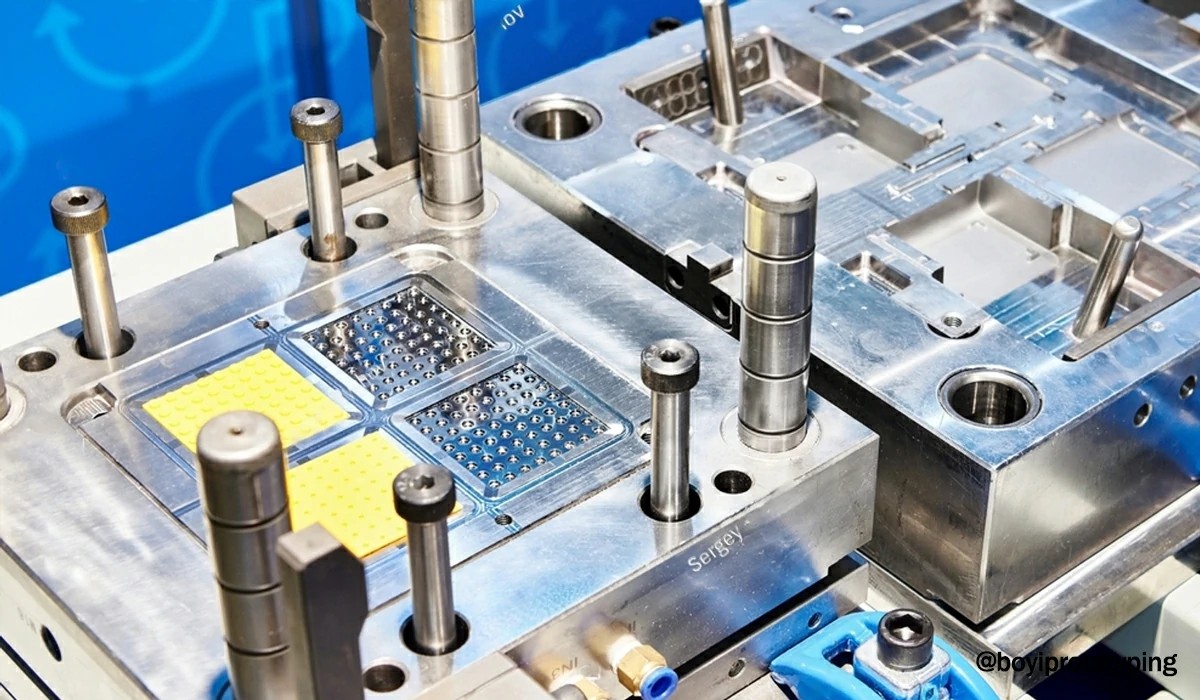
This is the biggest line item. Simple aluminum molds start around $1,000 to $3,000. Complex steel molds with multiple cavities can exceed $100,000. The mold’s material, size, and detail level all affect price. According to Protolabs, one of the easiest ways to reduce per-piece cost is by increasing part quantity, since tooling costs amortize over more parts.
If you need a custom mold built to your specs, our plastic injection mold making team can help design and manufacture tooling tailored to your production needs.
Material Costs
The plastic you choose matters. Commodity plastics like polypropylene and polyethylene cost less per pound. Engineering plastics like nylon cost more. High-performance plastics like PEEK can run $60 to $80 per pound or higher. Your part’s function determines which material fits best.
Machine and Production Costs
Press size, cycle time, and labor rates add up. Larger parts need bigger machines. Longer cycle times mean more run time. These factors set the hourly production cost.
Secondary Operations
Some parts need extra work after molding. Assembly, surface finishing, or pad printing adds to the final price. Plan for these if your design requires them.
Cost Factor
Typical Range
Mold/Tooling
$1,000 – $100,000+
Material (commodity)
$1 – $5 per pound
Material (engineering)
$5 – $25 per pound
Material (high-performance)
$60+ per pound
Production
$50 – $200 per hour
Secondary Ops
Varies by service
When Does Plastic Molding Become Cost-Effective?
Volume is the key question. The more parts you need, the more molding makes sense.
Here’s a simple way to think about it:
Under 100 parts: 3D printing or urethane casting usually costs less. Tooling fees don’t pay off at this scale.
100 to 500 parts: Rapid tooling with aluminum molds can work. You get lower upfront costs with decent per-part pricing.
1,000+ parts: Traditional steel molds pay off quickly. Per-part costs drop sharply.
The breakeven point for simple molds typically falls between 500 and 1,000 parts. After that, each additional part costs very little to produce.
We worked with a client making 5,000 phone case parts. Their 3D printed prototypes cost about $8 each. After switching to injection molding, their per-unit cost dropped to $0.45. The mold paid for itself within the first production run.
Simple Ways to Reduce Plastic Molding Costs
You have more control over price than you might think. Small choices add up to big savings.
Simplify your part design. Avoid undercuts, thin walls, and features that don’t serve a purpose. Simpler shapes mean simpler molds.
Use family molds. These produce multiple parts in one cycle. You pay for one mold instead of several.
Choose the right material. Don’t over-spec. If a commodity plastic meets your needs, use it. Save engineering-grade resins for parts that truly require them.
Increase your order volume. Higher quantities often unlock price breaks. Ask your molder about volume tiers.
Work with your molder early. Design-for-manufacturing feedback catches costly issues before tooling begins. Changes on paper cost far less than changes in steel.
One example sticks with us. A client came to our North Logan shop with a part design that needed a complex mold. Our team suggested a small radius change on one corner. That single tweak saved them $3,000 in tooling costs. The part worked just as well.
How to Get an Accurate Plastic Molding Quote
Getting a solid quote starts with good preparation. The more details you share, the more accurate your pricing will be.
What to have ready:
CAD file in STEP or IGES format
Material preference or performance needs
Target production volume
Timeline or deadline
Questions to ask your molder:
Who owns the tooling after it’s paid for?
What does mold maintenance cost?
Can you show per-part pricing at different volume tiers?
When comparing quotes, look beyond the bottom line. The cheapest mold isn’t always the best value. A well-built tool lasts longer and runs faster. That saves money over thousands of cycles.
At Freeform Polymers, we walk clients through every line item. No surprises. You’ll know exactly what you’re paying for and why.
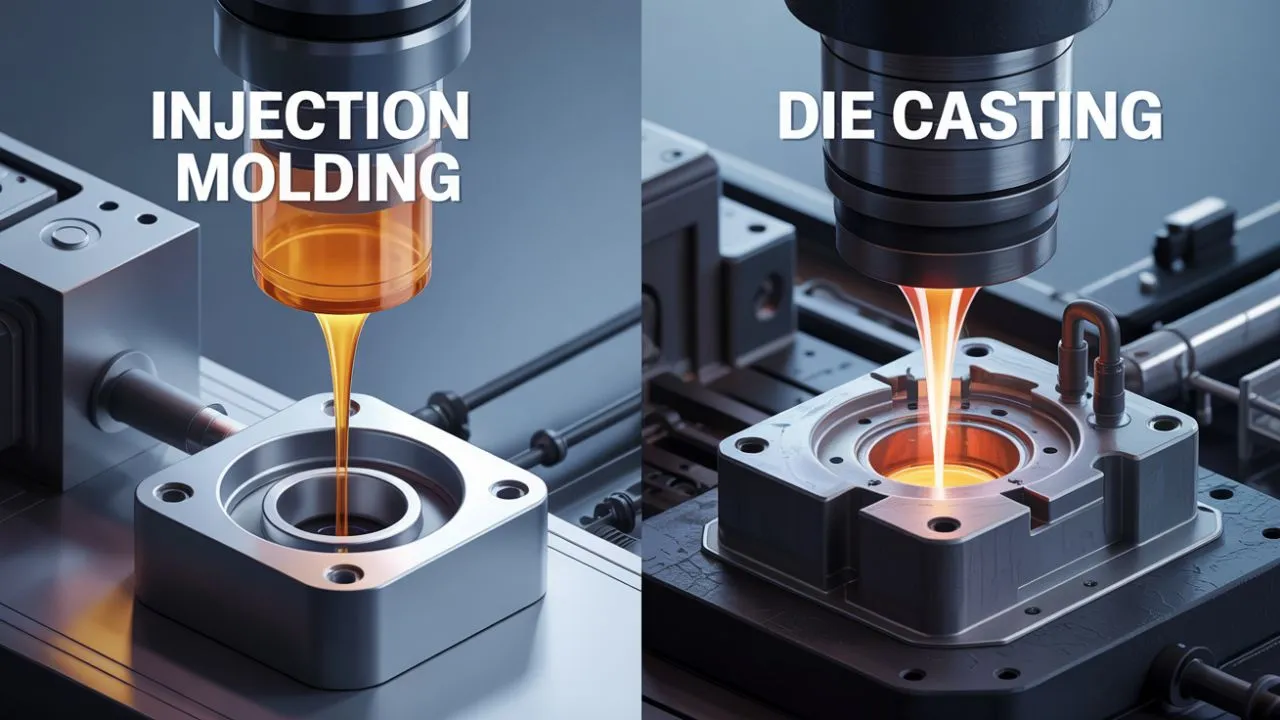
Should your part be plastic or metal? That question decides whether you need injection molding or die casting. Both processes push melted material into a mold under pressure. From across…
Is it cheaper to build your mold overseas or here at home? The honest answer depends on what you actually count. Many buyers compare domestic vs overseas injection molding using…
You have a part to make. Someone mentioned CNC turning or CNC milling. Maybe both came up. They sound alike, but they are not the same process. Picking the wrong…
You’ve probably seen the letters “ISO 9001:2015” on a badge or a website. It might look like just another logo. But it means something specific. ISO 9001:2015 certification tells you…
If you’ve gotten quotes from two injection molding companies, you may have noticed something. One mentions a hydraulic machine. The other mentions an electric machine. You might wonder if that…
Combining metal with plastic takes a different process than adding a soft grip to a hard plastic part. Both are common in insert molding and overmolding, but they solve different…
Not all injection molds are built the same way. At Freeform Polymers, we’ve seen how the type your part needs can change your tooling cost by thousands of dollars. That…
Ever gotten a design review back with a flag that says “insufficient draft”? You had no idea what that meant. It’s one of the most common notes molders give on…