free form logo

Insert Molding and Over Molding

Combine plastic with metal, electronics, or a second material in one molded part. Our insert molding and over molding services help you build stronger, smarter components in a single process.

What & We

Some parts need more than plastic alone. Insert molding places a pre-formed component, like a metal threaded insert, pin, or electronic part, into the mold before plastic is injected around it. The plastic encapsulates the insert, locking it in place permanently. Over molding builds a part in stages by molding a second material, often a soft thermoplastic elastomer (TPE) or rubber, over a rigid plastic substrate.

Both processes reduce part count, skip secondary assembly, and create stronger bonds than glues, fasteners, or press-fits. Insert molding is common for threaded brass inserts, electrical contacts, sensor housings, and structural metal-to-plastic parts. Over molding is common for soft-touch tool grips, ergonomic handles, sealed electronic enclosures, and dual-material consumer products.

Our team works with you on insert design, substrate geometry, and material pairing from the first review. The right setup keeps inserts stable during injection and helps the overmold material bond cleanly to the substrate, whether through chemical adhesion or mechanical interlocks built into the part.

Our Molding Process

We engineer the mold to hold inserts firmly during injection or to align cleanly between substrate and overmold steps. For insert molding, the cavity is built to seat each insert in an exact position. For over molding, the substrate is held in a second cavity for the next shot.

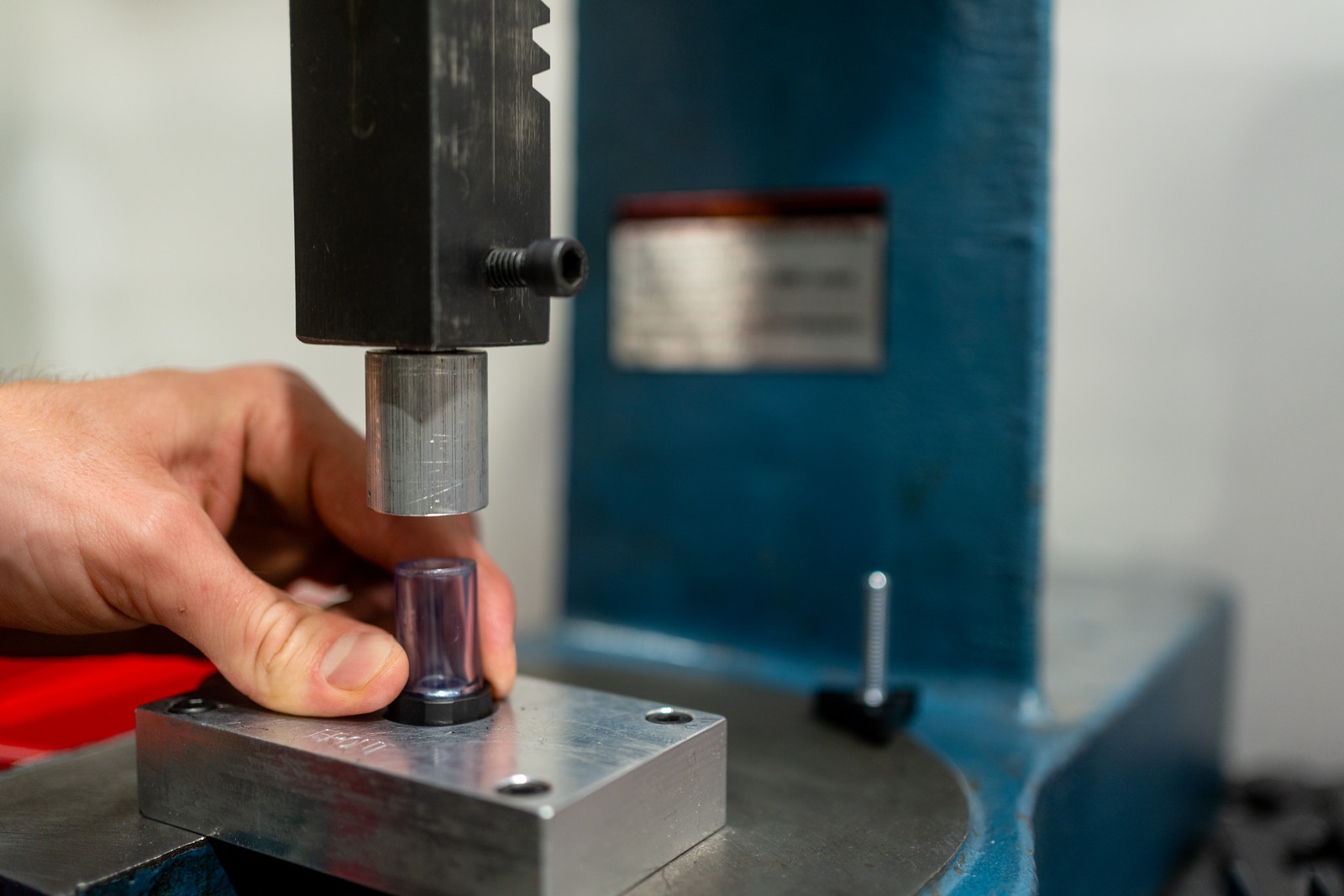
For insert molding, metal or pre-formed inserts are loaded into the mold by hand for low-volume runs or by robot for high-volume programs. For over molding, the rigid substrate is molded first using standard injection molding, then placed in the overmold tool.

Material pairing matters more than any other choice. Rigid substrates like polycarbonate, ABS, polypropylene, or nylon need to bond with the overmold material. We check chemical compatibility before tooling is cut and design mechanical interlocks when bonding alone is not enough.

The press is dialed in to fill around the insert without shifting it or to bond the second shot to the substrate without burning, warping, or weak adhesion. Pressure, temperature, and timing get tuned for each program.

Each part cools long enough for the plastic to lock around the insert or bond firmly to the substrate. Finished parts go through inspection for insert position, bond strength, dimensional accuracy, and cosmetic quality. Trimming, printing, or assembly are added when your project calls for them.
Start Your Project Today!

Contact Us

✉ info@freeformpolymers.com
  • (435) 774-9090
  • Open 8AM - 5PM Mon-Friday