We review your artwork, color specs, and placement. Files are prepared, and either an etched plate is built for pad printing or the digital file is loaded for inkjet output.
Plastic parts are cleaned to remove mold release, dust, and oils that can stop ink from bonding. Some materials, like polypropylene and polyethylene, get a flame or plasma treatment to help ink adhere.
Inks are matched to your plastic and your color targets. The ink chemistry, opacity, and cure type are chosen to hold up under handling, cleaning, and end use.
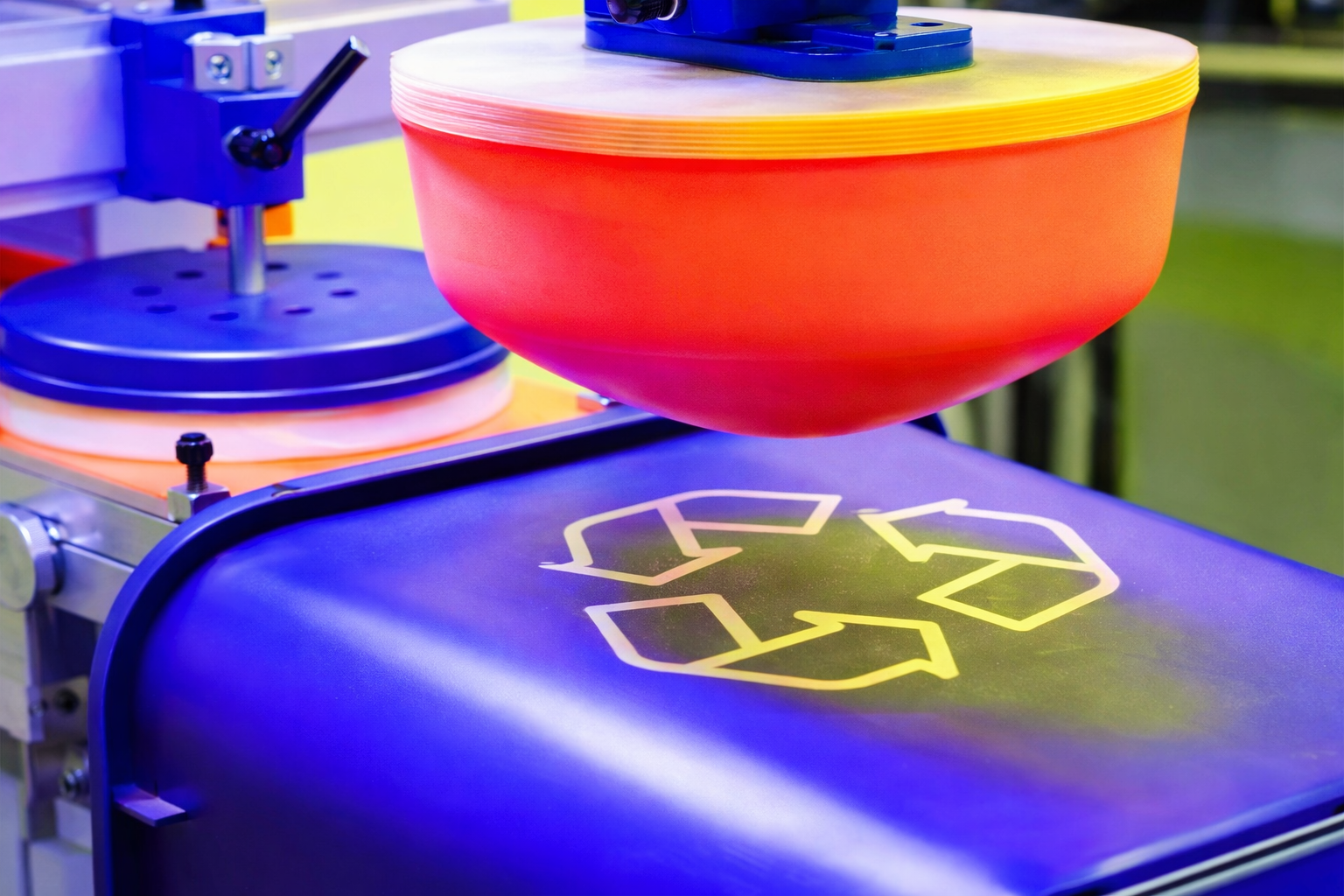
Pad printing transfers ink from the etched plate to the part using a silicone pad. Digital printing lays ink directly onto the part with an inkjet head. Multi-color jobs run pass by pass with tight registration.
Prints are cured by air, heat, or UV, depending on the ink. Each part is checked for sharpness, color match, and placement before it moves on.
