What Are the Three Types of Molding? Plastic Molding Methods Explained
Justin Brown
November 20th, 2025
Have you ever thought about how your smartphone case gets made? Or your car’s dashboard? These products all start as small plastic pellets. Plastic molding turns those pellets into finished items.
This guide covers the three main plastic molding types: injection, blow, and compression molding. You’ll learn which manufacturing method works best for different projects.
We’ll show you how each plastic molding process operates. You’ll see what products they create best. You’ll understand why injection molding became the top choice for precision parts and large production runs. After reading this, you’ll know exactly what questions to ask when you look for a plastic molding partner.
What are the three types of molding?
The three main types of plastic molding are injection molding, blow molding, and compression molding.
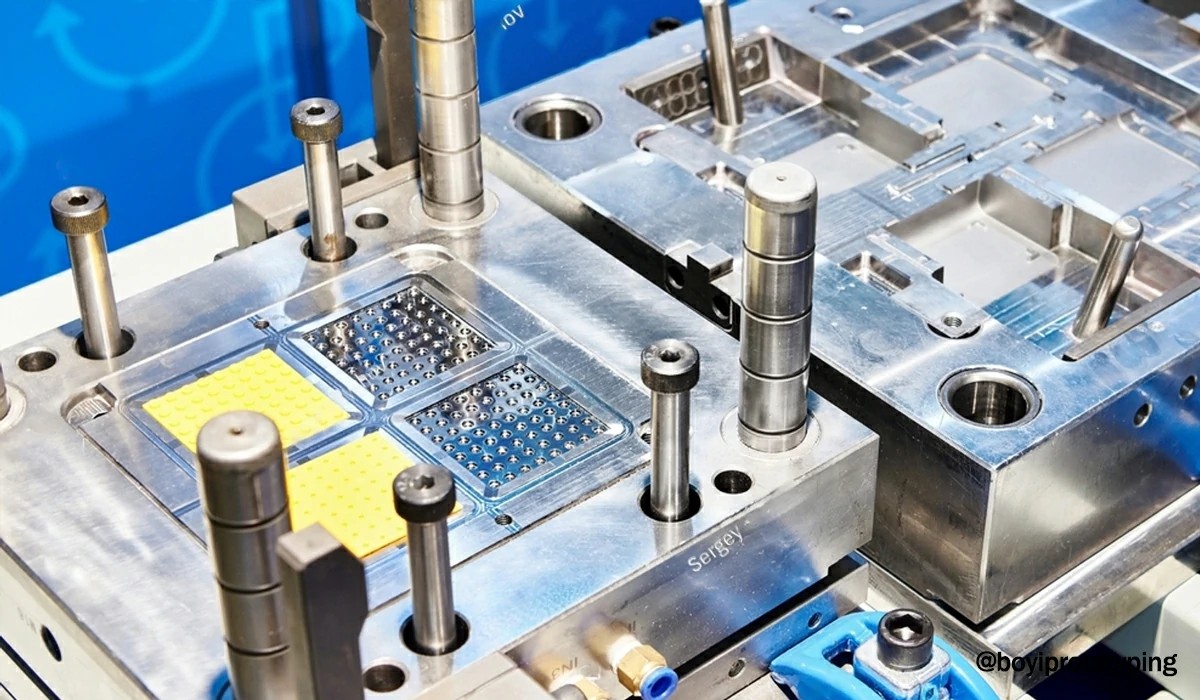
Injection molding pushes melted plastic into a mold cavity using high pressure. This method works great for complex shapes, exact measurements, and making large quantities of items like automotive parts, electronics housings, and medical devices.
Blow molding inflates heated plastic inside a mold. It’s like blowing up a balloon. This process makes hollow products like bottles, containers, and fuel tanks.
Compression molding puts plastic material straight into a heated mold. Then it applies pressure to shape it. People often use this for larger, simpler parts like automotive panels, electrical components, and rubber-like products.
Each method has different benefits. Your choice depends on your part design, material needs, how many you need to make, and your budget.
Understanding Plastic Molding: The Foundation of Modern Manufacturing
Plastic molding heats plastic material, shapes it inside a mold, and cools it until it becomes solid. This manufacturing method changed how products get made during the 1900s. It replaced older, slower, and more expensive ways of making things. Complex plastic parts became available to almost every industry.
Today, plastic molding creates most of the plastic products you use every day. The housing on your computer is molded plastic. The interior panels in your vehicle are too. This process helps make medical devices, consumer goods, automotive parts, aerospace components, and industrial equipment.
A few key factors separate one molding type from another. These include the pressure level, the temperature setting, how the mold looks, and what condition the material is in when it goes into the mold. When you understand these differences, you can pick the right process for your parts.
From our facility floor: We’ve molded everything from medical device components to automotive parts. Choosing the right process always begins with looking at part shape and how many units you need. Making the right choice at the start saves time and money. It stops production problems before they happen.
Injection Molding: Precision Parts at High Volume
Injection molding melts plastic pellets. Then it injects them into a mold cavity under high pressure. The material cools down. The finished part comes out. This cycle happens over and over for consistent, large-scale production.
This process creates complex shapes with very exact measurements. We’re discussing precision down to ±0.001 inches in many situations. Industry standards like ISO 20457 set these plastic molding tolerances. Injection molding handles big production runs well, from thousands to millions of parts. It can also make multi-material parts through overmolding. In this technique, one material sticks to another inside the same mold.
The material choices are wide. Injection molding uses thermoplastics like ABS, polycarbonate, nylon, and polypropylene. It also works with engineering-grade resins made for tough environments. These materials give you strength, heat resistance, or chemical resistance when you need them.
You see injection molded products all the time. Car interior parts like dashboards and door panels. Housings for phones and computers. Medical syringes and diagnostic devices. Packaging containers, kids’ toys, and many other products depend on this process.
5 Key Advantages of Injection Molding
Fastest cycle times for volume production — Parts get made in 10 to 60 seconds once the mold starts running.
Exceptional detail reproduction and surface finish — Fine features, textures, and logos copy straight from the mold.
Minimal post-processing required — Parts usually come out ready to use without extra finishing work.
Cost-effective per-unit at scale — The process normally breaks even at 1,000 to 5,000 units. After that, it becomes very economical.
Consistent quality across production runs — Automated processes make identical parts every single cycle.
Pro tip from the production line: Injection molding works best when you need walls with the same thickness and detailed features. We keep tolerances that other processes can’t reach. This matters when parts must fit together exactly or meet specific requirements.
Blow Molding: Creating Hollow Plastic Products
Blow molding begins with a heated plastic tube called a parison. Compressed air blows into this tube inside a mold. The air pushes the plastic to match the mold’s shape. After it cools, workers remove the part and trim it to make the final hollow product.
This process comes in three types. Extrusion blow molding makes bottles and containers by pushing out the parison without stopping. Injection blow molding creates small precision containers by injection molding the parison first. Stretch blow molding makes PET beverage bottles by stretching the parison before blowing air into it. This makes walls that are stronger and thinner.
Blow molding does a good job with bottles, fuel tanks, drums, and watering cans. Any hollow part without complex inside features works well. The process focuses on making sealed, hollow shapes that hold liquids or gases.
When you compare it to injection molding, blow molding has some drawbacks. It only creates hollow parts. You can’t make complex inside features or solid sections. Wall thickness often comes out uneven. Gravity pulls the hot plastic down before air inflates it. Getting exact measurements on openings or threads is tough.
Common Blow Molded Products
Beverage bottles for water, soda, and juice
Personal care containers like shampoo and detergent bottles
Automotive coolant tanks and windshield washer reservoirs
Industrial drums and bulk storage containers
Compression Molding: Large Parts and Thermoset Materials
Compression molding uses pre-measured material that goes straight into a heated mold. A hydraulic press pushes down from above. This pressure makes the material spread through the whole mold cavity. The material hardens under heat and pressure. Then workers take out the finished part.
This process works with larger parts. Many measure over 12 inches in any direction. It does well with lower production amounts. Usually hundreds to a few thousand units. Compression molding focuses on thermoset materials that can’t melt again after they harden. It also handles rubber-like parts that need flexibility and composite materials.
The benefits include lower tooling costs than injection molding. Compression molds have simpler designs. This cuts down on the money you pay upfront. The process manages fiber-reinforced composites really well. That’s why it’s popular for structural parts. Strong materials like carbon fiber and fiberglass perform effectively in compression molds.
But compression molding takes more time per cycle. Injection molding makes parts in seconds. Compression molding needs minutes for each cycle. The process needs more hands-on work. Workers often put material into each cavity by hand. Making complex shapes is harder. Material gets wasted during flash trimming. Extra material pushes out between the two halves of the mold.
Common Compression Molded Products
Automotive body panels and bumpers
Electrical insulators and switchgear components
Rubber seals and gaskets
Large appliance housings
Comparison: Compression Molding vs. Injection Molding
Factor
Compression Molding
Injection Molding
Cycle Time
2–10 minutes
10–60 seconds
Tooling Cost
$5,000–$25,000
$10,000–$100,000+
Best For
Large thermoset parts
Complex thermoplastic parts
Material Types
Thermosets, rubber, composites
Thermoplastics, some thermosets
Tolerance
±0.010″–±0.030″
±0.001″–±0.010″
How to Choose the Right Plastic Molding Method for Your Project
The right molding type depends on your part design, production volume, material requirements, and budget. Here’s how you can look at your options.
When injection molding is best
Injection molding does a great job with complex parts that have detailed features or exact measurements. The process makes good sense when you need large quantities. Usually 1,000 or more units to make the tooling costs worth it. It manages thermoplastic materials like ABS, polycarbonate, nylon, and polypropylene really well. After your mold gets finished, production runs happen quickly. Multi-cavity molds can make several identical parts at the same time. This increases how much you can make.
When blow molding fits
Blow molding works for hollow products like bottles, containers, and tanks. The process handles simpler shapes that don’t have inside complexity. People often pick it for budget-friendly packaging uses. In these cases, material cost matters more than getting exact measurements. You usually need medium to high quantities. About 5,000 units or more to make blow molding worth the cost.
When compression molding works
Compression molding manages large thermoset or rubber parts very well. The process fits low to medium quantities. From 100 to 5,000 units. Pick compression molding when you work with composite materials like carbon fiber or fiberglass. Simpler shapes work fine. The process has limits on detail and exact measurements.
4 Questions to Ask Your Molding Partner
☐ “What process do you recommend for my part geometry and production volume?” — A solid partner looks at your specific needs before they suggest a solution.
☐ “Can you provide tolerance capabilities and typical cycle time estimates?” — These numbers tell you about quality standards and how long production takes.
☐ “Do you offer design-for-manufacturability (DFM) reviews before quoting?” — DFM analysis finds possible problems early on.
☐ “What’s the expected tooling lead time and per-unit cost at my volume?” — You need information about both timeline and cost to plan well.
We always do DFM analysis before we give a quote. It finds design problems early that might mess up production later. This saves time and money for everybody working on the project.
When you’re thinking about plastic molding for precision components, injection molding gives you the best mix of quality, speed, and good prices at large scale. Our custom mold maker services make sure your tooling gets designed and built to perform great right from the beginning.
Ready to start with plastic injection molding? Our North Logan facility focuses on precision molding for medical, automotive, and consumer products.
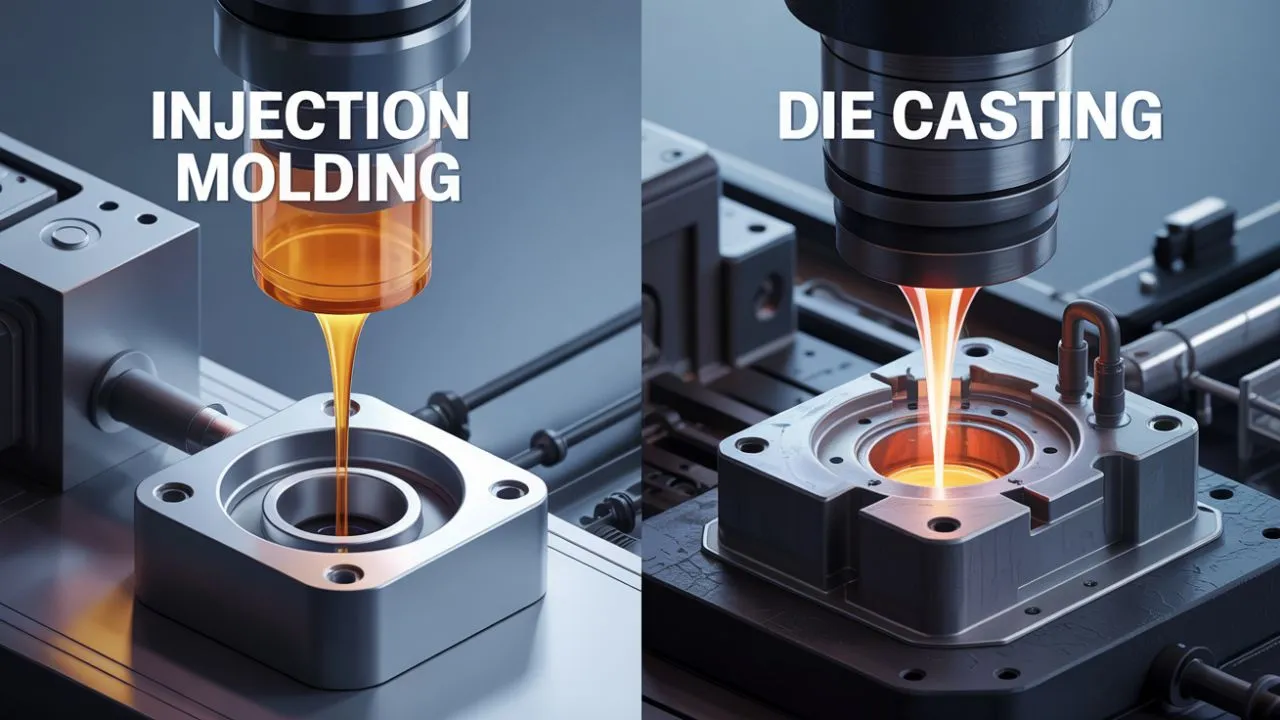
Should your part be plastic or metal? That question decides whether you need injection molding or die casting. Both processes push melted material into a mold under pressure. From across…
Is it cheaper to build your mold overseas or here at home? The honest answer depends on what you actually count. Many buyers compare domestic vs overseas injection molding using…
You have a part to make. Someone mentioned CNC turning or CNC milling. Maybe both came up. They sound alike, but they are not the same process. Picking the wrong…
You’ve probably seen the letters “ISO 9001:2015” on a badge or a website. It might look like just another logo. But it means something specific. ISO 9001:2015 certification tells you…
If you’ve gotten quotes from two injection molding companies, you may have noticed something. One mentions a hydraulic machine. The other mentions an electric machine. You might wonder if that…
Combining metal with plastic takes a different process than adding a soft grip to a hard plastic part. Both are common in insert molding and overmolding, but they solve different…
Not all injection molds are built the same way. At Freeform Polymers, we’ve seen how the type your part needs can change your tooling cost by thousands of dollars. That…
Ever gotten a design review back with a flag that says “insufficient draft”? You had no idea what that meant. It’s one of the most common notes molders give on…