What Is High Volume Injection Molding? A Guide for Manufacturers
Justin Brown
March 19th, 2026
You’ve finalized your part design. Your production numbers are climbing. Now comes the real question: is your current plastic molding process actually built for the volume you need?
For manufacturers moving tens of thousands — or millions — of units, that question has real cost implications. Running standard injection mold cycles when your volume qualifies for something more efficient means paying more per part than you have to.
This guide breaks down everything you need to know about high volume plastic molding — what it is, how it differs from standard runs, and how to know if your job qualifies.
We’ll walk through the process, the benefits, the qualifying criteria, and what to look for in a production partner. By the end, you’ll know exactly what questions to ask before your next run.
What Is High Volume Injection Molding?
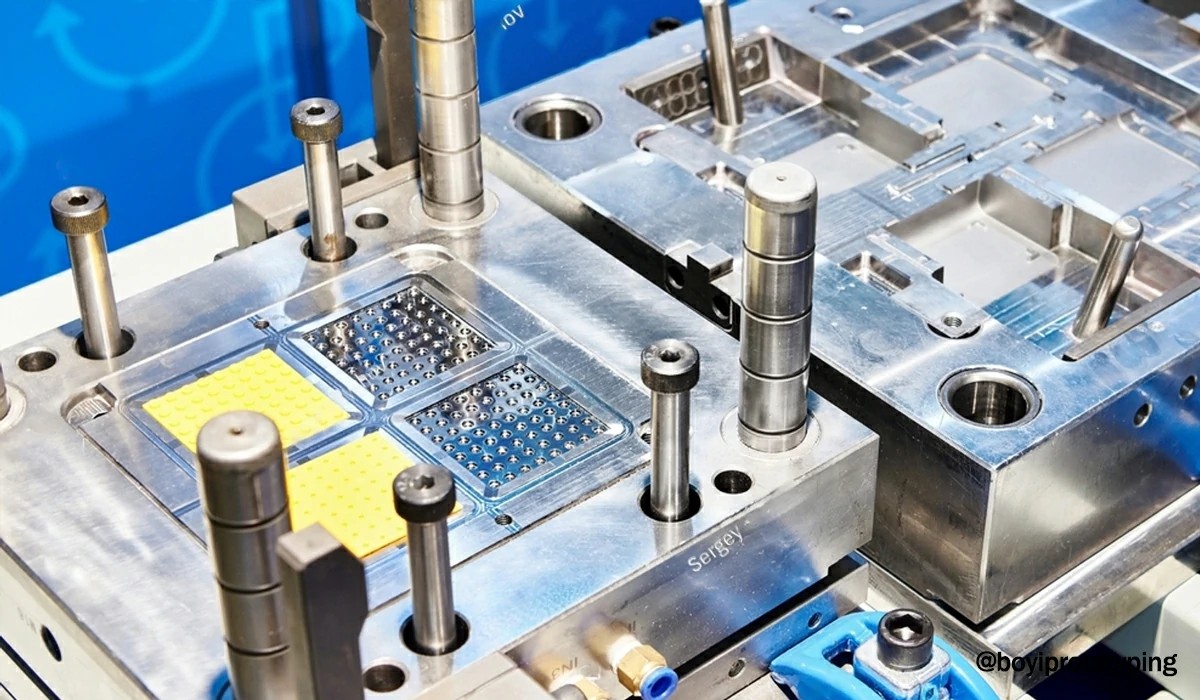
High volume injection molding is a plastic manufacturing process designed to produce large quantities of identical parts — typically 10,000 units or more — with maximum speed, consistency, and cost efficiency. It uses hardened steel molds, often with multiple cavities, to run continuous production cycles with minimal downtime. Because tooling cost is spread across a high unit count, the per-part price drops significantly compared to low or standard volume runs. Industries like automotive, medical devices, consumer electronics, and packaging rely on high volume plastic molding when they need tight tolerances at scale. It is best suited for parts with a finalized, proven design ready for full production.
High volume injection molding is built for large, repeating production runs. It is designed to produce identical parts quickly, consistently, and at the lowest possible cost per unit.
Most manufacturers and suppliers define high volume as runs starting at 10,000 units. From there, runs can scale to hundreds of thousands — or even millions — of parts depending on the job.
The process relies on two key mold types:
Multi-cavity molds — produce multiple identical parts in a single cycle
Hot runner systems — keep plastic material molten inside the mold, reducing waste and speeding up cycle times
These mold types work together to maximize output per machine hour.
High volume plastic molding serves industries where consistency and scale are non-negotiable:
Automotive components
Medical devices and disposables
Consumer electronics housings
Packaging and caps
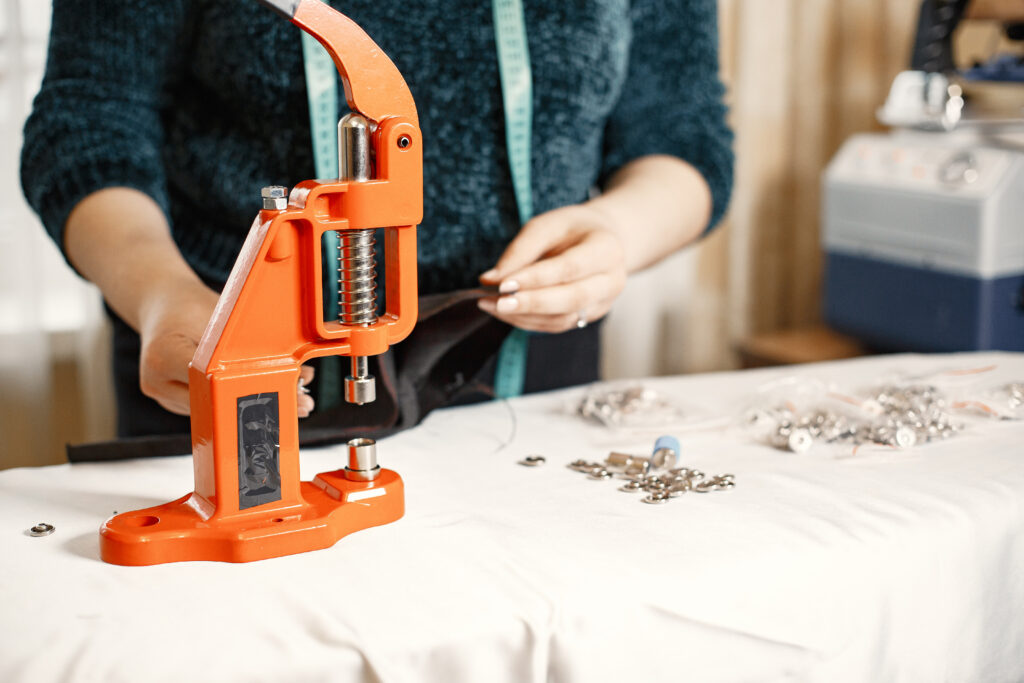
Orange press for clothes. Buttons on fabric. Woman with sewing tools
How Is High Volume Injection Molding Different from Standard Runs?
The biggest difference comes down to tooling. Standard and prototype runs typically use aluminum molds. High volume runs use hardened steel — H13 is the standard for true high-volume production, while P20, a pre-hardened steel, is often used for medium-volume runs. Steel holds tighter tolerances over hundreds of thousands of cycles. Aluminum wears faster and is better suited for shorter runs or parts still in development.
Cycle time is another key difference. High volume jobs are set up to run with minimal interruption. Machine utilization is higher, changeovers are less frequent, and output per shift is significantly greater than a standard run.
Here is how the two approaches compare:
Factor
High Volume Run
Standard Run
Tooling material
Hardened steel (H13)
Aluminum or P20 steel
Typical unit range
10,000–1M+ parts
Under 10,000 parts
Per-unit cost
Lower — cost spreads across volume
Higher — tooling cost hits fewer parts
Cycle time
Optimized for speed and output
Moderate — not fully dialed in
Quality control
SPC, automated inspection
Manual inspection, spot checks
Best for
Finalized designs, repeat demand
Prototypes, low demand, design iteration
Quality control also works differently at scale. High volume production uses statistical process control (SPC) and automated inspection to catch variation early. That means fewer defective parts reaching your floor.
At Freeform Polymers, the shift from standard to high volume typically happens when a client’s demand is consistent and their part design has passed a full DFM review. That is the point where investing in hardened tooling makes financial sense for both sides.
What Parts and Jobs Qualify for High Volume Injection Molding?
Not every part is ready for high volume production. The design, the material, and the demand all need to line up before a high volume run makes sense.
Part design requirements:
A part qualifies when the geometry is fully finalized. That means:
Draft angles are correct for clean ejection from the mold
Wall thickness is consistent throughout the part
No features are likely to change after tooling is cut
The part has passed a design for manufacturability (DFM) review
If any of those items are unresolved, high volume tooling is premature.
Volume thresholds by industry:
Different industries hit the high volume threshold at different points:
Automotive — typically 50,000+ parts per year
Consumer goods and packaging — often 25,000+ units per run
Medical devices and disposables — can qualify at 10,000+ with the right resin and tolerance requirements
Material fit:
Common resins for high volume runs include polypropylene (PP), ABS, nylon, and polycarbonate. Each has different flow, shrink, and durability characteristics. The right resin needs to be selected and tested before tooling begins.
Signs a job is NOT ready for high volume:
The part is still in prototype or development stage
Design changes are expected after initial samples
Demand is uncertain or seasonal with no clear baseline
The resin has not been finalized
Key Benefits of High Volume Plastic Molding
Once your part qualifies and your tooling is proven, high volume plastic molding delivers advantages that standard runs simply cannot match. Here is what you gain:
1. Lower cost per part Tooling is the largest upfront investment in injection molding. When that cost is spread across tens of thousands of parts, the per-unit price drops significantly. The higher your volume, the more that cost advantage compounds.
2. Faster lead times once production is dialed in The first run takes the longest. After tooling is proven and the process is locked in, repeat orders move quickly. Your mold is ready, your settings are saved, and your material is spec’d. Reorders become predictable.
3. Repeatability and dimensional consistency High volume tooling is built to hold tight tolerances across long runs. Every part comes off the press matching the last one. That consistency matters in industries like medical devices and automotive where variation is not acceptable.
4. Reduced labor cost per unit Multi-cavity molds and automated cycle controls mean more parts per machine hour with less hands-on labor. That efficiency passes directly to your per-part cost.
5. Less material waste per part Optimized tooling and hot runner systems reduce runner waste and scrap rates. Over a long production run, that adds up to meaningful material savings — and a smaller environmental footprint per part produced.
These benefits are real. But they only show up when your production partner has the equipment, the process discipline, and the quality systems to sustain them at scale.
How to Choose a High Volume Injection Molding Partner
Choosing the right production partner affects your cost, your lead times, and your part quality. Here is what to look for before you commit.
Certifications that matter:
ISO 9001 — the baseline quality management certification for injection molding suppliers. It means the shop has documented processes, consistent quality controls, and a system for catching and correcting problems.
IATF 16949 — required for automotive supply chains. If your parts go into vehicles, your supplier needs this.
ISO 13485 — the standard for medical device manufacturing. Ask for it if your parts are used in medical applications.
Freeform Polymers is ISO 9001:2015 certified. We are actively pursuing ISO 13485 and AS9100 to serve customers in medical device and aerospace manufacturing. Learn more about our team and quality commitments on our About page.
In-house tooling vs. outsourced tooling:
A supplier who builds and maintains molds in-house gives you faster turnaround on repairs, modifications, and new tool builds. When tooling is outsourced, you add lead time and a communication layer every time something needs to change.
Questions to ask any potential supplier:
What are your cavitation capabilities for my part size?
What is your typical cycle time at volume for a similar part?
Do you offer a DFM review before tooling begins?
How do you handle quality control during a long production run?
What is your process for managing reorders and repeat production?
Red flags to watch for:
No quality certifications or vague answers about their QMS
Tooling is always outsourced with no in-house moldmaking
No DFM review offered before cutting steel
Unclear lead time commitments on repeat orders
No references or track record with your industry
At Freeform Polymers, every new job goes through a DFM review before we quote tooling. We want to catch problems on paper — not on the press. Our team in North Logan, UT has built a reputation across Northern Utah and Southern Idaho for being a reliable, local alternative to overseas sourcing.
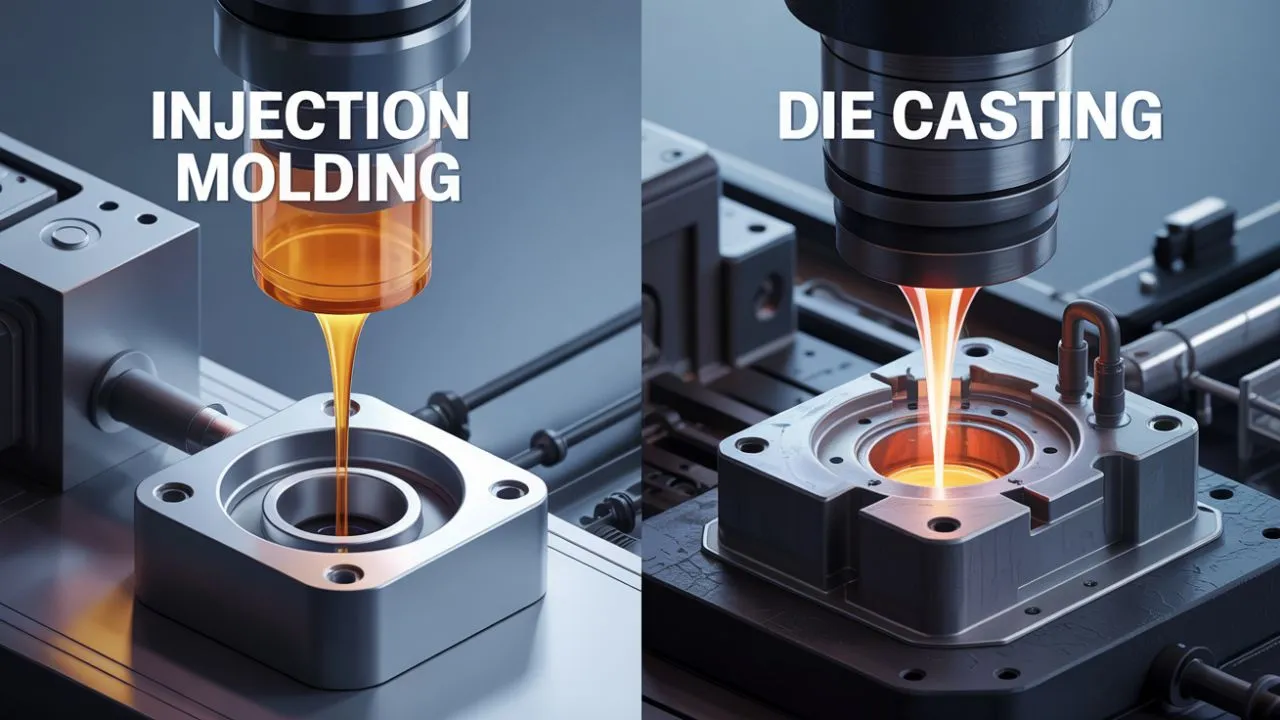
Should your part be plastic or metal? That question decides whether you need injection molding or die casting. Both processes push melted material into a mold under pressure. From across…
Is it cheaper to build your mold overseas or here at home? The honest answer depends on what you actually count. Many buyers compare domestic vs overseas injection molding using…
You have a part to make. Someone mentioned CNC turning or CNC milling. Maybe both came up. They sound alike, but they are not the same process. Picking the wrong…
You’ve probably seen the letters “ISO 9001:2015” on a badge or a website. It might look like just another logo. But it means something specific. ISO 9001:2015 certification tells you…
If you’ve gotten quotes from two injection molding companies, you may have noticed something. One mentions a hydraulic machine. The other mentions an electric machine. You might wonder if that…
Combining metal with plastic takes a different process than adding a soft grip to a hard plastic part. Both are common in insert molding and overmolding, but they solve different…
Not all injection molds are built the same way. At Freeform Polymers, we’ve seen how the type your part needs can change your tooling cost by thousands of dollars. That…
Ever gotten a design review back with a flag that says “insufficient draft”? You had no idea what that meant. It’s one of the most common notes molders give on…