What Is the Typical Shrinkage Rate in Injection Molding?
You design a part to be exactly 100 mm long. The first samples come back at 98.5 mm. Nothing went wrong on the press, and the mold wasn’t built wrong.…

Managing a plastic parts project means keeping a lot of moving pieces in order. Who designs the mold? Who sources the resin? Who runs production? Who handles assembly and ships the finished product? If the answer is “a different vendor for each step,” you already know how much time and money gets lost in the gaps between them.
Most production delays don’t happen on the factory floor. They happen between vendors — in handoffs, miscommunications, and waiting. A turnkey plastic injection molding service eliminates most of those gaps by keeping everything under one roof.
This guide explains exactly what a turnkey plastic injection molding service is and how the process works from start to finish. We will walk you through each step, compare turnkey to the traditional multi-vendor model, cover real advantages and honest limitations, and show you what to ask before choosing a partner. Freeform Polymers is a full-service plastic injection molding and contract manufacturing company in Cache Valley — this is how we approach it.
Turnkey manufacturing in plastic injection molding is a service where one provider manages the entire production process. That includes mold design, tooling, resin sourcing, injection molding, assembly, and final delivery. Instead of hiring separate vendors for each stage, you hand the full project to a single manufacturer. This reduces handoff errors, shortens lead times, and gives you one point of contact for quality, timeline, and cost. It works best for businesses that want to focus on their product and market — not on managing a manufacturing supply chain.
“Turnkey” means you hand a project over and get a finished product back. The term comes from the idea of turning a key — the product is ready to run with no extra assembly required on your end. You are not buying a single step in a process. You are buying the whole process.
In plastic injection molding, a turnkey arrangement covers every stage. That means mold design, tooling, production, assembly, and delivery. Your provider owns the timeline, the quality, and the outcome from the first call to the final shipment.
This is different from hiring a shop to run your mold and nothing else. Standard injection molding is one step. Turnkey manufacturing is a contract manufacturing arrangement that wraps every step into a single engagement.
At Freeform Polymers, a typical turnkey engagement starts with a consultation call. We map every stage of your production need before we quote anything. That way, nothing is assumed and nothing is missed.
A good turnkey provider follows a clear, repeatable process. Here is what that looks like from the first conversation to the finished part.
Step 1 — Consultation We start by scoping your project. That means understanding your part specs, material needs, production volumes, and budget. Nothing moves forward until we have a clear picture of what you need.
Step 2 — Sourcing We identify the right resin and any sub-components your project requires. We handle supplier relationships so you don’t have to.
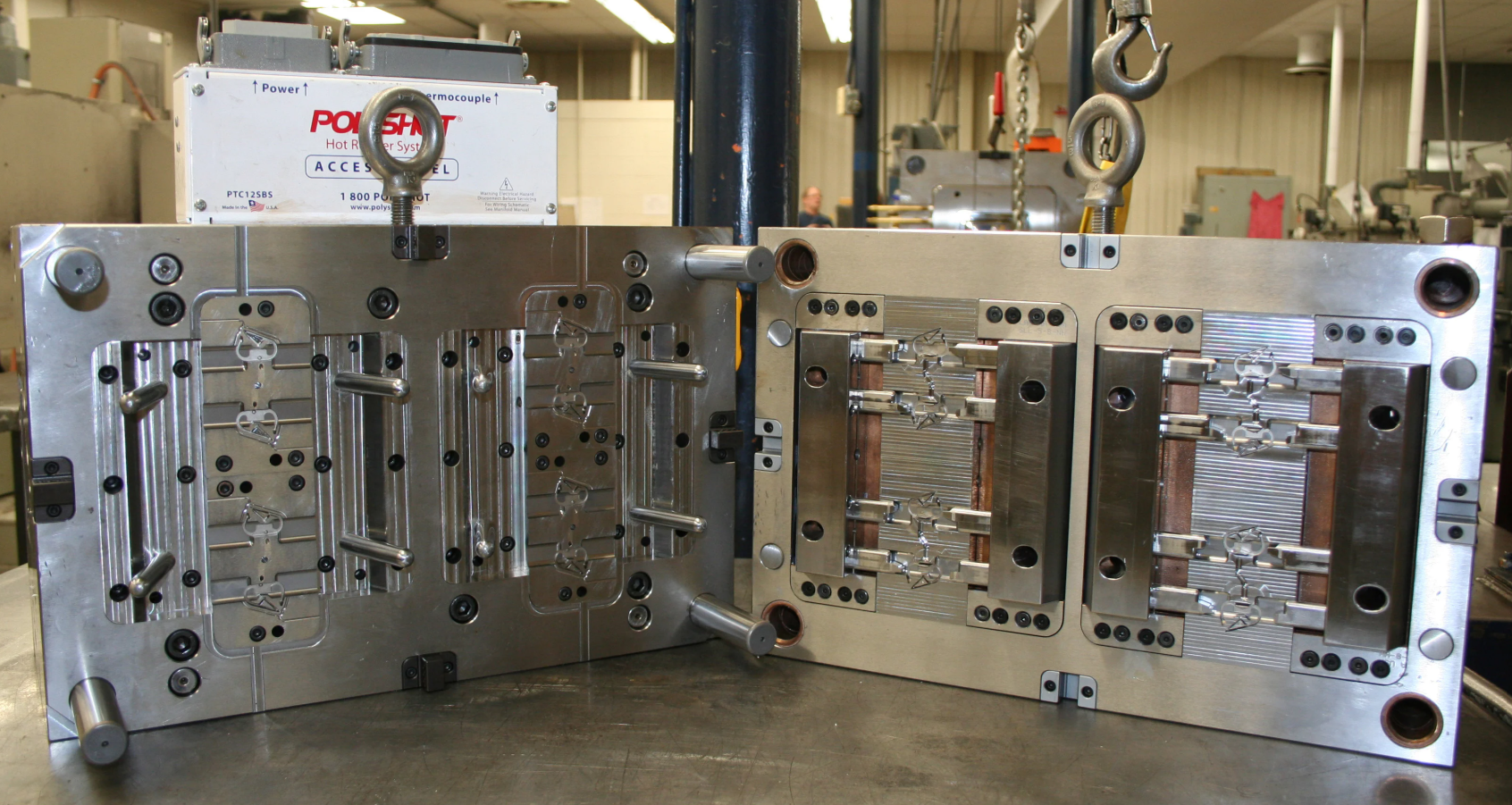
Step 3 — Mold Design & Tooling We engineer and build your injection mold in-house. Lead times vary depending on mold complexity — your team will get a clear timeline during consultation. Either way, you are not waiting on an overseas toolmaker.
Step 4 — Production & Quality Control We run the injection molding process with quality checks at each cycle — not just at the end. Problems get caught early, before they become costly.
Step 5 — Assembly & Delivery We finish and assemble components as required, then ship the final product to you or your customer.
Step 6 — Ongoing Management You have one point of contact for reorders, adjustments, and supply chain questions. No tracking down multiple vendors for answers.
During mold sampling, quality checks often catch design issues that would cause problems at production scale. Fixing those issues before a full run starts saves significant time and cost. That is one reason multi-stage quality oversight matters more than a single final inspection.
The core difference comes down to who manages the process — you or your manufacturer.
The Traditional Multi-Vendor Model. You hire separate vendors for mold making, molding, assembly, and logistics. You coordinate schedules, manage quality at each handoff, and chase answers when something goes wrong. You have more control over each individual step, but the coordination burden falls entirely on your team.
The Turnkey Model. One provider owns the entire flow. You have less involvement at each micro-step, but far less to manage overall. One company is accountable for quality, timeline, and cost — start to finish.
Here is how the two models compare directly:
| Turnkey | Multi-Vendor | |
| Points of contact | One | Multiple |
| Accountability | Single provider | Shared across vendors |
| Coordination burden | On the manufacturer | On your team |
| Lead time | Shorter — no handoff gaps | Longer — gaps between vendors |
| Cost structure | Bundled | Itemized per vendor |
| Quality oversight | Managed end to end | Managed at each handoff |
Which model fits your situation?
Turnkey works best for companies scaling a new product, businesses without in-house manufacturing operations, and teams that want to focus on sales and growth rather than production management.
The traditional model fits large enterprises with dedicated procurement teams who want maximum leverage over each vendor at every stage.
Turnkey injection molding offers real advantages. It also comes with trade-offs worth knowing before you commit.
Benefits
Limitations
One thing we tell clients upfront: turnkey works best when you trust your partner enough to let them flag problems early. The companies that get the most value treat us as an extension of their team — not just another vendor.
The benefits of turnkey manufacturing only show up if you choose the right partner. Here is what to look for before you commit.
In-house mold making capability If your provider outsources tooling, you inherit their lead time and their supplier’s quality. Look for a shop that designs and builds molds in-house. It shortens your timeline and keeps accountability in one place.
Multi-stage quality checks Final inspection alone is not enough. Ask how quality is checked during production — not just at the end. Problems caught mid-cycle cost far less than problems caught after a full run.
Materials range Confirm your provider can run your specific resin. We work with a wide range of thermoplastics — tell us what your part requires and we will confirm compatibility during consultation. A wider materials range means fewer projects that require a second vendor.
Certifications ISO 9001:2015 is the baseline standard for quality management in manufacturing. Any serious custom plastic injection molding provider should hold it. If your project touches medical devices or aerospace, ask about ISO 13485 and AS9100 progress. Freeform Polymers is ISO 9001:2015 certified and actively pursuing both ISO 13485 and AS9100 to serve those markets.
Communication structure Ask who your point of contact will be and how changes are handled mid-project. A clear answer here signals an organized operation. A vague one signals the opposite.
Domestic vs. offshore lead time Domestic manufacturing gives you a real advantage in tooling turnaround and quality oversight. If speed to market matters — and it usually does — working with a local provider keeps communication direct and timelines tighter.
Ready to talk through your project? Request a free quote or call our team at (435) 774-9090 to start your project today!