Which Plastic Is the Most Toxic? A Manufacturer’s Guide to Safer Resin Choices in Injection Molding
Justin Brown
May 28th, 2026
When you design a product, the resin you pick matters as much as the shape. Choose the wrong one and you could face recalls, failed compliance reviews, or unhappy end users.
This guide walks through which plastics are considered toxic, which ones are safe for plastic injection molding, and how to pick the right resin for your product.
You’ll see the four plastics most often flagged for health and environmental concerns, the safer alternatives we use in our own shop, and the questions to ask any manufacturer before approving a resin.
Which Plastic Is the Most Toxic?
Polyvinyl chloride (PVC, #3) is widely considered one of the most toxic plastics in common use. Made from vinyl chloride — a known human carcinogen — PVC exposes communities, workers, and consumers to dangerous chemicals throughout its lifecycle. It can leach phthalates, lead, cadmium, chlorinated paraffins, organotins, and dioxins during production, use, and disposal, posing serious health and environmental risks.
Three other plastics are commonly flagged for health and environmental concerns:
Polystyrene (PS, #6) — can leach styrene, which the U.S. National Toxicology Program lists as reasonably anticipated to be a human carcinogen
Polycarbonate (PC, #7) — historically associated with bisphenol A (BPA) leaching
Black plastics — often contain recycled electronic waste with flame retardants and heavy metals
Safer alternatives for plastic injection molding include polypropylene (PP, #5), high-density polyethylene (HDPE, #2), ABS, and food-grade or medical-grade resins specified for the application.
The word “toxic” depends on context. A resin might be safe in one use and risky in another. Production, daily use, and disposal each create different exposure paths. A pipe fitting buried in a wall is not the same as a food container in a microwave.
Most plastic products carry a recycling code from #1 to #7 inside a triangle. That code tells you the resin family. It’s a quick way to spot whether a part is made from one of the flagged plastics or a safer option.
Not every plastic belongs on a watch list. Many resins are safe, well-studied, and a strong fit for everyday products. The rest of this article covers the four problem plastics first, then the safer choices we run in our shop.
The 4 Plastics Most Often Flagged for Health and Environmental Concerns
Each of these resins has a specific reason it shows up on watch lists. Here’s what to know about each one before you spec it into a product.
Polyvinyl Chloride (PVC, #3)
PVC shows up in pipes, flooring, blister packs, shower curtains, and some older toys. It’s cheap, durable, and easy to mold, which is why it stuck around for so long.
The concerns are well documented. PVC often contains phthalate plasticizers to make it flexible. It can also include lead or cadmium as stabilizers. Burning PVC releases dioxins, which are tied to long-term health risks.
We do run PVC in our shop for industrial applications where it’s the right material. For food-contact, medical, or children’s products, we flag PVC for review and suggest a safer resin.
Polystyrene (PS, #6)
Polystyrene is the resin behind foam cups, takeout clamshells, plastic cutlery, and some packaging. It’s light, cheap, and easy to form.
The main concern is styrene leaching, especially with heat or oily foods. The International Agency for Research on Cancer classifies styrene as probably carcinogenic to humans, and the U.S. National Toxicology Program lists it as reasonably anticipated to be a human carcinogen. Several states, including New York, New Jersey, Maine, and Washington, have banned EPS foam in food service.
Polycarbonate (PC, #7)
Polycarbonate is strong, clear, and impact-resistant. You’ll find it in water bottles, food storage, eyewear lenses, and some medical devices.
The concern is bisphenol A (BPA). Older PC formulations can leach BPA, especially when heated or scratched. The FDA banned BPA-based polycarbonate in baby bottles and sippy cups in 2012. Many newer PC grades are now BPA-free, so the resin grade matters. If you’re spec’ing PC, ask for the data sheet and confirm the additive package.
Black Plastics
Black plastic is often made from recycled electronic waste, like old TV casings and computer parts. That sounds good for the environment, but those parts contain brominated flame retardants, antimony, and other heavy metals.
Those additives can carry over into the new product. Black plastics are also harder to recycle. Sorting machines use lasers to read resin types, and carbon black absorbs the laser, so the parts get sent to landfill.
Resin
Code
Common Uses
Primary Concern
PVC
#3
Pipes, flooring, blister packs
Phthalates, dioxins, heavy metal stabilizers
Polystyrene
#6
Foam cups, takeout containers
Styrene leaching (probable carcinogen — IARC 2A)
Polycarbonate
#7
Water bottles, eyewear, food storage
BPA leaching (older grades)
Black Plastics
Varies
Electronics, kitchen tools
Flame retardants, heavy metals from e-waste
Safer Plastics Commonly Used in Injection Molding
Now that you know which resins to watch for, here are the alternatives most product manufacturers turn to instead. Each one has a clear set of strengths and a typical use case.
Polypropylene (PP, #5) is food-safe, flexible, and chemical-resistant. We use it for containers, medical components, automotive interiors, and living-hinge parts. It’s one of the most widely accepted food-contact resins.
High-Density Polyethylene (HDPE, #2) is tough, food-safe, and widely recyclable. Milk jugs, detergent bottles, and cutting boards are all HDPE. It holds up well to chemicals and impact.
ABS is strong and impact-resistant. It’s the resin behind LEGO bricks, electronics housings, and many consumer products. ABS takes paint and finishes well, which helps for cosmetic parts.
Nylon (PA) is an engineering-grade resin. We use it for gears, bearings, mechanical parts, and components that need to hold tight tolerances under stress.
TPE and TPU are flexible resins that work as PVC alternatives in many applications. They’re used for grips, seals, gaskets, and soft-touch parts.
We run a wide range of resins in our shop, including PP, ABS, nylon, PC, TPU, and TPE. Each project gets a material recommendation based on what the part actually has to do. Note that #7 is a catch-all “other” category. ABS and nylon share that code with polycarbonate, but they don’t carry the same BPA concern.
Safer Resin
Code
Best For
Example Application
Polypropylene (PP)
#5
Food contact, flexibility
Storage containers, medical parts
HDPE
#2
Durability, food safety
Bottles, jugs, cutting boards
ABS
#7
Strength, finish quality
Electronics housings, toys
Nylon (PA)
#7
Mechanical strength
Gears, bearings, fasteners
TPE / TPU
Varies
Flexibility, soft-touch
Grips, seals, gaskets
How Material Choice Affects Your Finished Product
Picking a safe plastic is only half the job. The right resin also has to fit how your product will actually be used. End-use drives the spec, not the other way around.
A few common categories shape the choice:
Food contact: The FDA requires food-contact plastics to meet 21 CFR rules. PP, HDPE, and certain BPA-free PC grades are common picks.
Medical devices: Many medical parts need USP Class VI resins with biocompatibility testing on file.
Children’s products: CPSIA limits phthalates and lead. That rules out most flexible PVC formulations.
Outdoor or UV exposure: ASA and certain PC blends hold color and strength under sunlight better than ABS or PP.
High-heat parts: Nylon and PC handle higher service temperatures than PP or HDPE.
Cost matters too, but cheaper isn’t always safer or stronger. A low-cost resin that fails compliance review costs far more in rework than spending a bit more upfront on the right grade.
The smart move is to define the end-use first, then match the resin to it. That’s the conversation we have with every new project before quoting tooling.
How a Manufacturer Helps You Pick the Right Resin
A good manufacturer asks questions before quoting. Not all shops do this. Many will run whatever resin the customer specifies, even if a better option exists.
Our standard process starts with design review and material selection before we ever cut a mold. Skipping that step is where most resin mistakes happen.
Here’s how we work through it:
Design review. We look at the part geometry, wall thickness, and draft angles. Some resins flow better in thin walls. Others need more draft.
End-use questions. We ask about temperature, chemical exposure, food or skin contact, regulatory needs, and expected service life.
Material shortlist. Based on those answers, we recommend two or three resin candidates with the tradeoffs spelled out.
Prototyping. When the application is critical, we run sample parts in the candidate resin before committing to custom plastic injection molding tooling.
Documentation. Every approved resin comes with a material data sheet and, when required, a certificate of compliance.
Quality system. Our ISO 9001:2015 certification means each step is tracked, signed off, and traceable.
This process catches resin mistakes before they reach the mold. A failed material choice after tooling is built is one of the most expensive corrections in manufacturing.
Questions to Ask Before Approving a Resin for Production
Before you sign off on any quote, run through this short checklist with your manufacturer. Any shop worth working with should answer each one without hesitation.
What recycling code is this resin, and what additives are in it? The base resin is only part of the story. Plasticizers, stabilizers, and colorants change the safety profile.
Is it FDA, USP Class VI, or CPSIA compliant if my application requires it? Ask for the specific grade name and the compliance documents.
Can you provide a material data sheet and a certificate of compliance? Both should be on file before production starts.
What are the safer alternatives if my first choice has concerns? A good manufacturer will offer options, not just say yes.
Have you molded this resin before, and what tolerances did you hit? Experience with the specific resin matters as much as the resin itself.
Print this list or screenshot it. Bring it to every material conversation. The answers will tell you quickly whether a shop is the right partner for your project.
Ready to start your project? Contact us at Freeform Polymers or call us at (435) 774-9090 to request a quote; we’ll recommend the right resin for your project and walk you through the process.
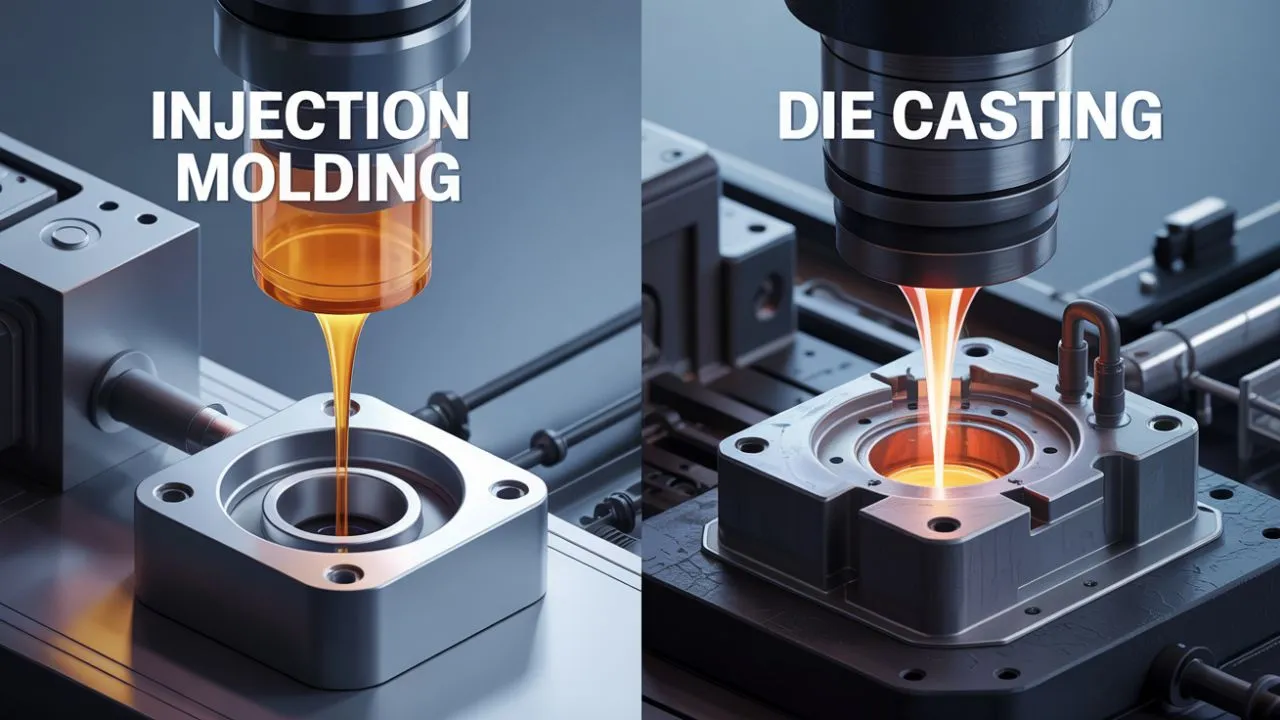
Should your part be plastic or metal? That question decides whether you need injection molding or die casting. Both processes push melted material into a mold under pressure. From across…
Is it cheaper to build your mold overseas or here at home? The honest answer depends on what you actually count. Many buyers compare domestic vs overseas injection molding using…
You have a part to make. Someone mentioned CNC turning or CNC milling. Maybe both came up. They sound alike, but they are not the same process. Picking the wrong…
You’ve probably seen the letters “ISO 9001:2015” on a badge or a website. It might look like just another logo. But it means something specific. ISO 9001:2015 certification tells you…
If you’ve gotten quotes from two injection molding companies, you may have noticed something. One mentions a hydraulic machine. The other mentions an electric machine. You might wonder if that…
Combining metal with plastic takes a different process than adding a soft grip to a hard plastic part. Both are common in insert molding and overmolding, but they solve different…
Not all injection molds are built the same way. At Freeform Polymers, we’ve seen how the type your part needs can change your tooling cost by thousands of dollars. That…
Ever gotten a design review back with a flag that says “insufficient draft”? You had no idea what that meant. It’s one of the most common notes molders give on…