Insert Molding vs. Overmolding: What’s the Difference?
Justin Brown
September 3rd, 2026
Combining metal with plastic takes a different process than adding a soft grip to a hard plastic part. Both are common in insert molding and overmolding, but they solve different problems.
This guide breaks down how each process works. You’ll learn what makes insert molding different from overmolding. You’ll also see when to ask for one over the other.
We’ll cover how each process is built, when one fits your part better than the other, and what that choice means for your tooling and material costs. By the end, you’ll know exactly what to ask for before you request a quote.
What Is the Difference Between Insert Molding and Overmolding?
Insert molding places a pre-formed part — like a metal thread, pin, or electronic component — into the mold before plastic is injected around it. This locks the insert permanently in place.
Overmolding works differently. It molds a rigid plastic base first. Then it adds a second material, often a soft rubber or TPE, over that base in a separate step.
Insert molding joins plastic to a non-plastic part. Overmolding joins two plastic materials together.
Insert molding starts with a metal or pre-formed part. We load this insert into the mold before plastic is injected.
Low-volume runs often use hand-loading. High-volume programs use robot-loading instead.
Once the insert is in place, plastic flows in and encapsulates it. This locks the insert permanently into the finished part.
Common uses for insert molding include:
Threaded inserts
Pins
Electronic components
The result is one finished part. You skip the secondary assembly step entirely.
What Is Overmolding?
Overmolding starts with a rigid plastic base. We mold this substrate first, in a standard shot.
Next, we mold a second material over that base. This is often TPE or rubber, added in a separate stage. This layered build is a well-documented technique within the wider injection molding process.
Before we cut any tooling, we check that the two materials are chemically compatible. This step matters because not every plastic bonds well to another. Mechanical interlocks are sometimes added to help the two materials grip when a chemical bond alone isn’t enough.
Common uses for overmolding include:
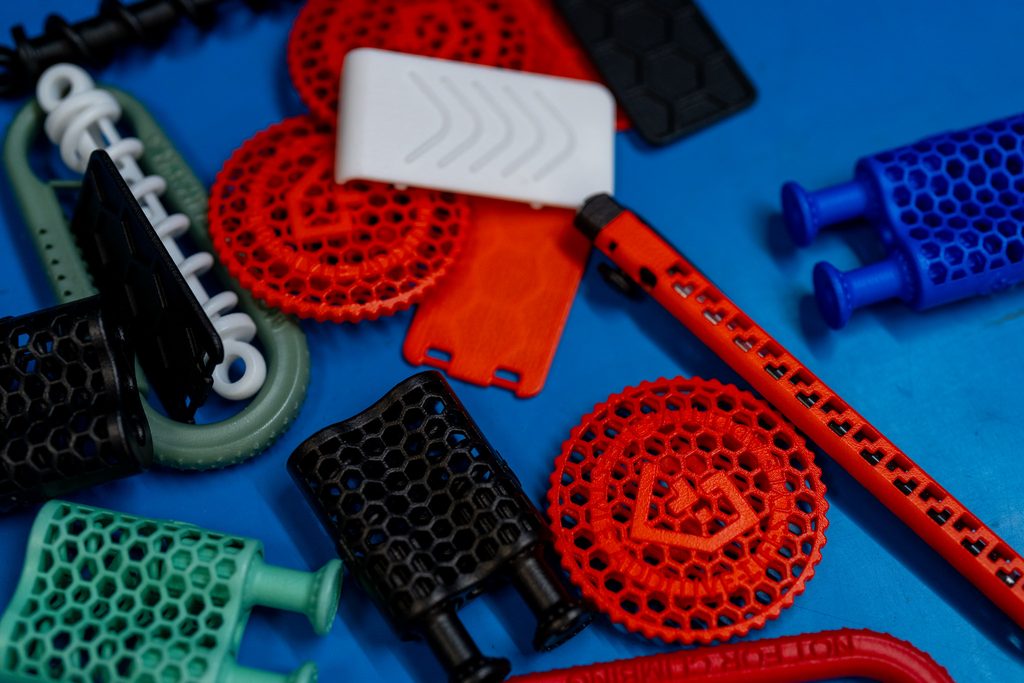
Soft-touch grips
Seals
Dual-color parts
The result is two materials bonded into one functional part.
Insert Molding vs Overmolding: Key Differences
Now that you know how insert molding works, here’s how overmolding compares.
Insert Molding
Overmolding
What’s being joined
Plastic to a non-plastic part
Plastic to plastic
Process sequence
One shot, with the insert placed first
Two stages, molded separately
Typical materials
Metal inserts with a rigid plastic
A rigid plastic base with a soft TPE or rubber
Typical parts
Threaded inserts, pins, electronic components
Soft-touch grips, seals, dual-color parts
Which Process Fits Your Part?
With both processes defined, the real question is which one fits your part.
Use this checklist to guide your decision:
Joining metal or electronics to plastic → choose insert molding
Adding a grip, seal, or dual-material feel → choose overmolding
Material compatibility is the main risk to flag early, before tooling is cut
Your production volume affects cost, since hand-loading and robot-loading carry different per-unit costs
Flagging risks this early follows the same thinking behind Design for Manufacturability: catching problems on paper costs far less than fixing them after tooling is cut.
Insert Molding and Overmolding at Freeform Polymers
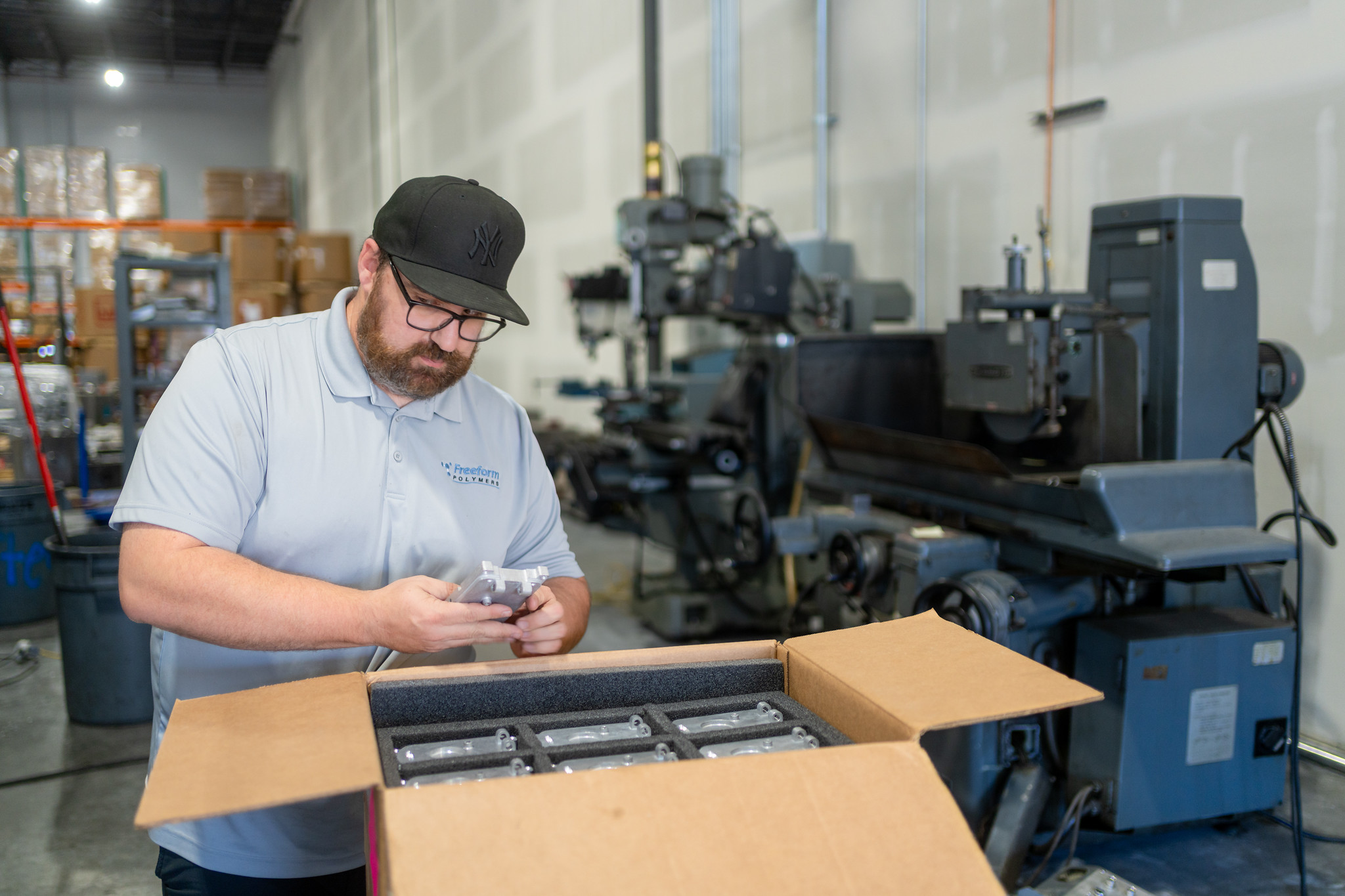
At Freeform Polymers, we run both insert molding and overmolding in-house, at our facility in Logan. Before we cut any tooling, our team checks that your materials pair correctly.
We handle both low-volume programs and high-volume production runs. Either way, the process stays the same: check compatibility first, then build with confidence.
Ready to move forward? Contact Us today to get started!
You need 400 parts for a product launch. The first quote comes back with a 10,000-part minimum. Now you face a hard choice. You can buy parts you don’t need,…
Your circuit boards are finished. Your enclosure is molded. Screws, cables, and labels are coming from four different suppliers. Someone still has to turn that pile of parts into one…
You asked for a smooth, nice-looking part. Then the samples came back shiny, and every fingerprint and tiny dent showed. The mold did exactly what it was told. It just…
Your first sample parts look great until you flip one over. There’s a rough nub right on the face your customer sees first. That nub is where the plastic came…
Your first sample parts just came back. They look right until you tilt one toward the light. Then you see it: a shallow dent sitting right over a rib. Nothing…
Your CAD model says 25.00 mm. Your first molded parts come back at 24.93 mm. Is that a problem, or is it normal? The answer depends on the tolerance you…
A part passes inspection and ships out on time. Weeks later, it cracks after a solvent wipe or a tightened bolt. Nothing was wrong with the design. The stress was…