If you’ve gotten quotes from two injection molding companies, you may have noticed something. One mentions a hydraulic machine. The other mentions an electric machine. You might wonder if that difference actually matters for your part.
At Freeform Polymers, we hear this question often. There are three main types of injection molding machines: hydraulic, electric, and hybrid. Each one uses a different drive system to melt, inject, and shape plastic.
This guide breaks down all three types. You’ll learn how each one works, where it performs best, and how to match one to your project. By the end, you’ll know enough to ask an informed question the next time you request a quote.
What Are the 3 Main Types of Injection Molding Machines?
There are three main types of injection molding machines. Each one is classified by its drive system.
- Hydraulic machines — use fluid pressure to power clamping and injection. They’re strong, durable, and the most common type worldwide.
- Electric machines — use servo motors for precise, repeatable, and energy-efficient production.
- Hybrid machines — combine electric control for injection with hydraulic force for clamping. They balance precision and power.
What Is an Injection Molding Machine?
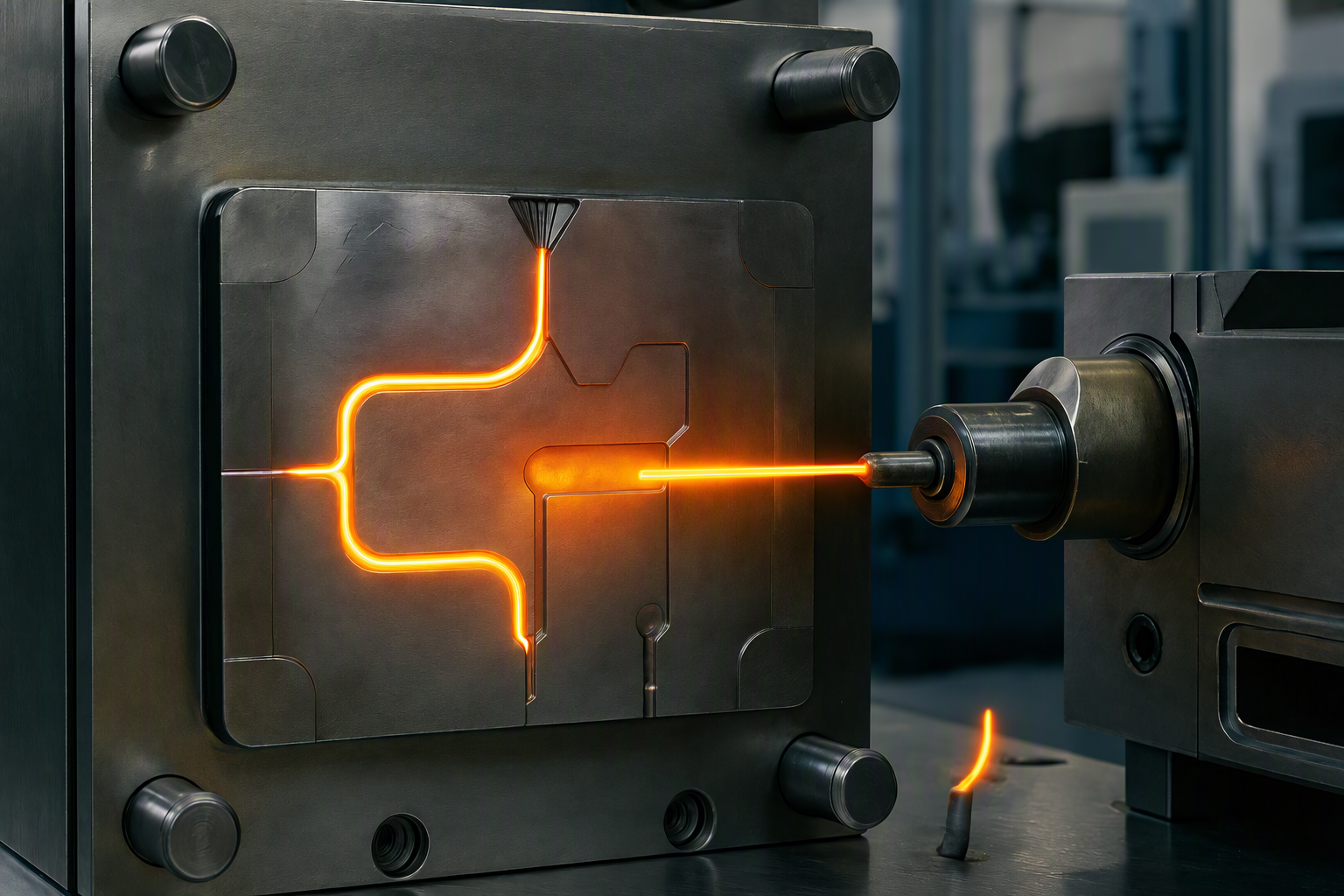
An injection molding machine (IMM) melts plastic and injects it into a mold. Each cycle runs through four stages: clamp, inject, cool, and eject.
We won’t walk through each stage here. You can see the full injection molding process for that breakdown. What matters for this guide is how the machine powers those stages — and that comes down to its drive system.
If you’re also curious how mold design fits into the picture, our guide to mold types covers that separately.
The 3 Main Types of Injection Molding Machines
Injection molding machines fall into three groups. That grouping is based on one thing: the drive system that powers each stage of the cycle.
- Hydraulic machines use fluid pressure to power the clamp, injection, and ejection stages.
- Electric machines use servo motors instead of fluid pressure. This gives them tighter control and less wasted energy.
- Hybrid machines mix the two. They use electric control for injection and hydraulic force for clamping.
Hydraulic machines remain the most common type across most of the world. Japan is often cited as the exception, with a longer track record of electric adoption. This classification, by drive system type, has stayed consistent across the industry for decades.
Each type brings its own strengths and trade-offs. We’ll break those down next, starting with hydraulic machines.
Hydraulic Injection Molding Machines
Hydraulic machines use fluid pressure to power the clamp, injection, and ejection stages. A pump pushes hydraulic fluid through cylinders, and that fluid pressure creates the force needed to close the mold and push plastic into it.
This design gives hydraulic machines a lot of raw power. They can generate very high clamping force, which makes them a strong fit for large or heavy-duty parts. They’re also known for being durable and able to run for years with proper maintenance.
That power comes with trade-offs. Hydraulic machines use more energy than electric machines, since the pump often keeps running even when it’s not actively pressing. They also tend to be noisier and less precise than electric machines. And even hydraulic power has its ceiling — some large parts fit injection molding poorly no matter the machine type, which is worth knowing before you tool up.
Hydraulic machines work best for:
- Large or thick-walled parts, like automotive components
- High-tonnage jobs that need heavy clamping force
- Projects where raw power matters more than fine precision
Electric Injection Molding Machines
Electric machines use servo motors instead of hydraulic pressure. Each motor controls one function, like clamping or injection, with precise digital commands.
This gives electric machines tight control over speed, position, and pressure. That control leads to consistent, repeatable parts, cycle after cycle. Electric machines can also cut energy use by 20% to 50% compared to hydraulic machines, since the motors only draw power when they’re moving.
Electric machines are a strong fit for parts that need tight tolerances. Medical devices and electronics often call for this level of precision. They also run quieter than hydraulic machines, which helps in cleanroom settings. If your project also needs machined components alongside molded parts, our precision machining services deliver that same tight-tolerance accuracy.
The trade-off is cost. Electric machines usually carry a higher upfront price than hydraulic machines. For many buyers, the energy savings and precision offset that cost over time.
Electric machines work best for:
- Parts with tight tolerances, like medical or electronic components
- Cleanroom or low-noise production environments
- Long-term projects where energy savings add up
Need a precise, repeatable process for a demanding part? Our custom injection molding for complex parts service is built for exactly that.
Hybrid Injection Molding Machines
Hybrid machines combine both drive systems. A common setup uses electric control for injection and hydraulic force for clamping, though the exact mix can vary by machine.
This mix gives you a middle option. You get some of the precision of an electric machine, along with some of the raw clamping power of a hydraulic one. Hybrid machines often fit projects that need moderate precision along with moderate tonnage.
We often see buyers turn to hybrid machines when a project outgrows what hydraulic precision can deliver, but doesn’t justify the full cost of an all-electric line. It’s a middle-ground decision, not a compromise.
They’re not the right fit for every job. If you need top-tier precision, an electric machine still leads. If you need maximum clamping force for a large part, a hydraulic machine still wins. Hybrid machines shine when your project sits in between.
How to Choose the Right Machine Type for Your Project
The right machine type depends on a few factors. Here’s what matters most:
- Precision — how tight do your part’s tolerances need to be?
- Volume — are you running a short batch or a long production run?
- Budget — what upfront cost fits your project?
- Sustainability goals — does energy use factor into your decision?
You don’t need to specify a machine type yourself. A good manufacturing partner will match the right machine to your part’s spec sheet. That’s part of the job.
At Freeform Polymers, we walk through these factors with you before your project starts. Contact us and request a quote today and we’ll help you find the right fit for your project’s part.