What Is 2K Injection Molding? How Two-Shot Molding Works
Justin Brown
June 18th, 2026
Ever wonder how a toothbrush gets a hard handle and a soft grip in one piece? There is no glue holding the two parts together. The answer is two plastics, one machine cycle, and one finished part. That is the short version of 2K molding.
This guide explains what 2K injection molding is and how it works. It also covers when the process is the right call for your part. This helps if you are weighing 2K against simpler choices. You will see each step in plain terms, with no heavy jargon.
What Is 2K Injection Molding?
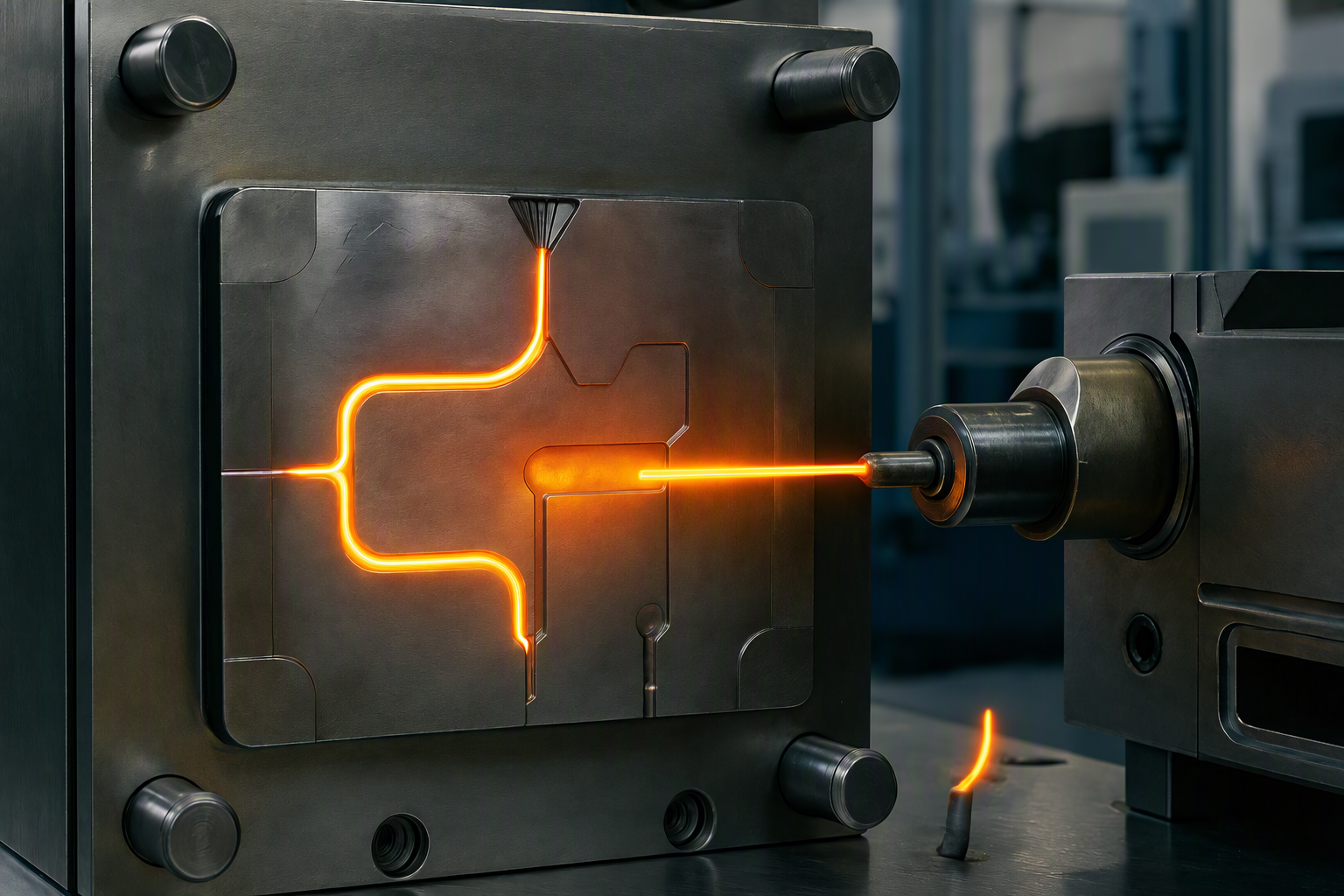
2K injection molding makes two different plastics into one solid part. It does this in a single machine cycle. The first plastic is injected and partly cooled. Then the mold shifts, and the second plastic is added. The two bond together, so no glue or assembly is needed. It is used for parts that need two colors or a hard-and-soft feel, like tool grips, buttons, and seals.
The “2K” name comes from “two components.” You may also hear 2K molding called:
Two-shot injection molding
Two-color injection molding
Two-component molding
These names all point to the same process, a form of multi-material injection molding. It exists to join two materials without a second assembly step.
Think of a hard core with a soft skin molded right on top. Both come from one machine, in one shot cycle. That is 2K in a single part.
How the 2K Injection Molding Process Works
The 2K process runs in four steps inside one machine cycle:
The first plastic is injected into the mold and partly cooled.
The mold rotates, or the core shifts, to open space for the second shot.
The second plastic is injected against the first material.
The two plastics bond, cool, and eject as one finished part.
Each step happens in sequence, with no break for handling. The part never leaves the machine between shots.
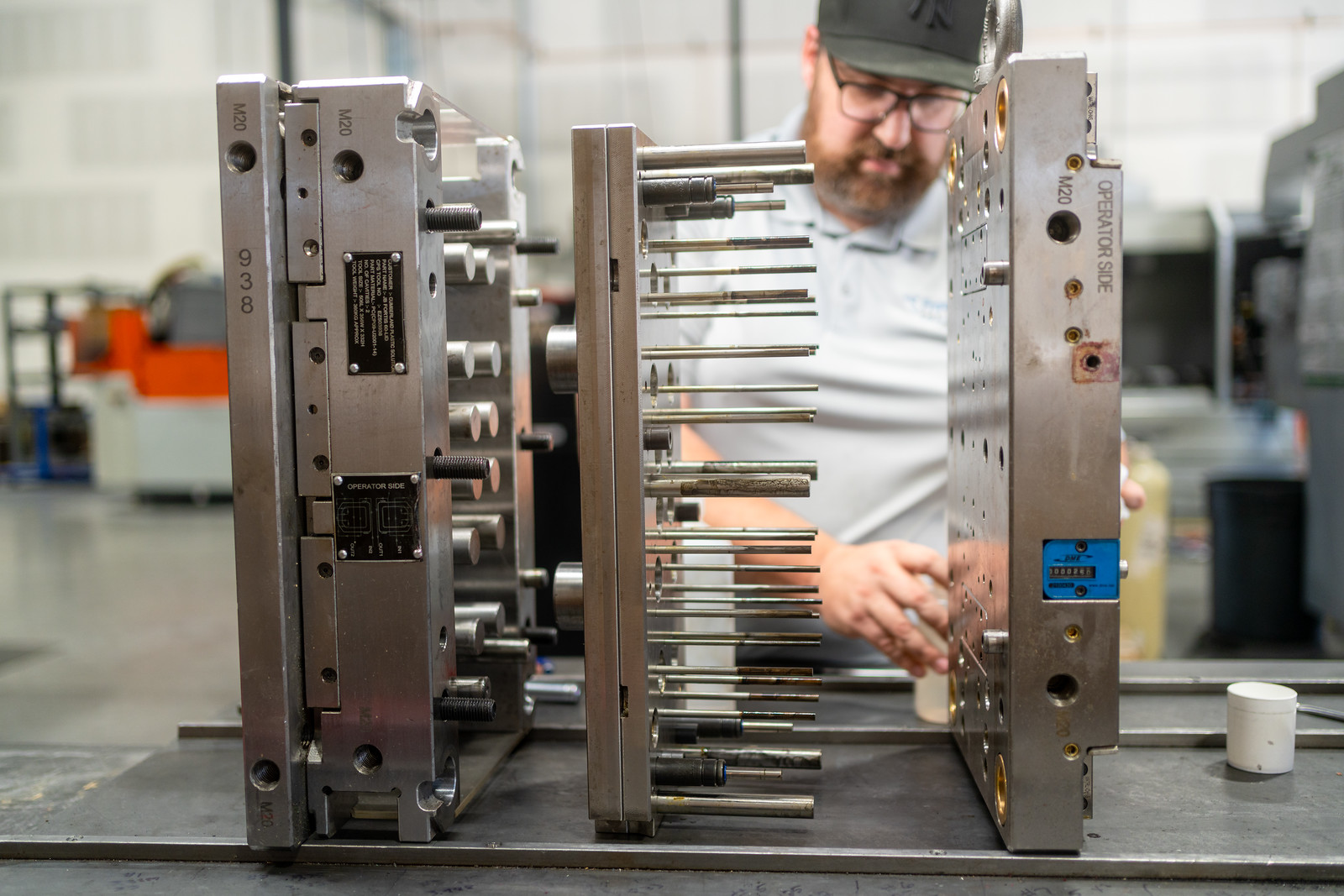
On our machines, the mold itself does the hard work. A rotating platen or core-back tool moves the first part into position for the second shot. We watch cooling time closely, since it controls how well the two plastics bond.
Advantages of 2K Injection Molding
2K molding gives you several gains over gluing or assembling parts:
No secondary assembly. Both materials join in the machine, so you skip gluing and extra labor.
A stronger bond. The two plastics fuse during molding, which holds better than glued joints.
Consistent quality. One cycle means fewer parts to track and fewer steps where errors creep in.
More design freedom. You can combine color, grip, and function in one piece.
These benefits lower your part count and your handling time. You get a finished piece straight off the machine.
Common Applications of 2K Injection Molding
2K molding fits many parts that need two materials in one piece:
Tool grips, handles, and soft-touch buttons
Automotive switches, seals, and knobs
Medical and consumer devices
Multi-color housings and logos
If your part needs a hard base with a soft grip, 2K may be a good match. The same is true for parts that pair two colors with no paint or labels. We mold these to your exact design through our custom plastic injection molding work.
Mold Requirements for 2K Injection Molding
2K molding needs the right tooling and setup. Here is what the process calls for:
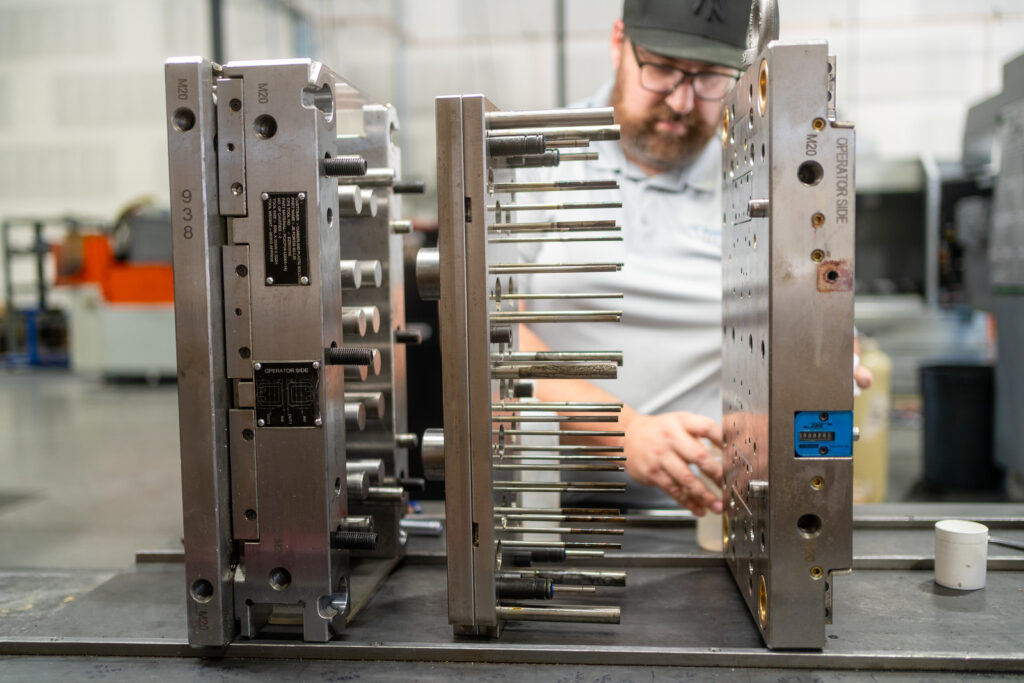
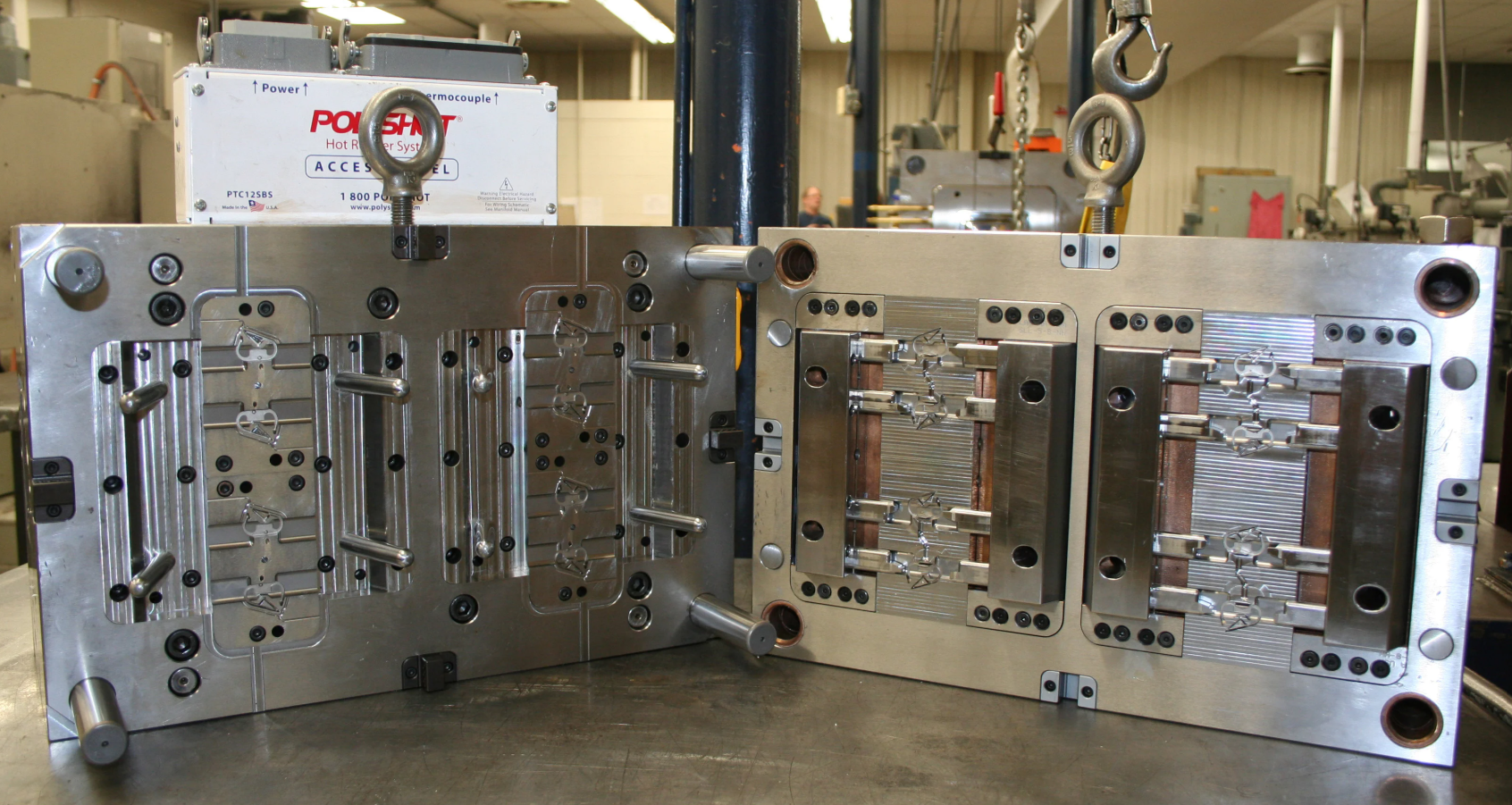
A specialized two-shot mold, with a rotating platen or core-back design
Two resins that bond well together
A machine with two injection units
The mold is the biggest difference from standard molding. It must hold the first part in place while the second shot goes in.
From our fieldwork, material pairing matters most. Not every two plastics will bond, even when both seem similar. We test the pair early, so the part holds together in use. For help picking resins, read our guide on the best plastics for injection molding.
2K Injection Molding vs. Overmolding
Both processes join two materials, but they work in different ways. 2K does both shots in one machine and one cycle. Overmolding often adds a second material over a part that was made earlier, in a separate step.
2K Injection Molding
Overmolding
Cycle
Both shots in one cycle
Often a separate step
Bond
Strong, molded-in
Good, but depends on the base part
Cost
Higher tooling, lower labor
Lower tooling, more handling
Best use
High volume, two-material parts
Lower volume or added grips
For high volumes, 2K saves labor over time. For smaller runs, overmolding can cost less up front. The right choice depends on your part, your volume, and the bond you need.
In our shop in Logan, we use 2K when a part needs two materials bonded as one. Freeform Polymers builds these parts in-house, so the steps come from real work. That hands-on view shapes everything you read here.
Contact us today and get started with your project!
You asked for a smooth, nice-looking part. Then the samples came back shiny, and every fingerprint and tiny dent showed. The mold did exactly what it was told. It just…
Your first sample parts look great until you flip one over. There’s a rough nub right on the face your customer sees first. That nub is where the plastic came…
Your first sample parts just came back. They look right until you tilt one toward the light. Then you see it: a shallow dent sitting right over a rib. Nothing…
Your CAD model says 25.00 mm. Your first molded parts come back at 24.93 mm. Is that a problem, or is it normal? The answer depends on the tolerance you…
A part passes inspection and ships out on time. Weeks later, it cracks after a solvent wipe or a tightened bolt. Nothing was wrong with the design. The stress was…
You design a part to be exactly 100 mm long. The first samples come back at 98.5 mm. Nothing went wrong on the press, and the mold wasn’t built wrong.…