How Long Does an Injection Mold Last? Mold Life by Class, Material, and Care
The mold is often the biggest check you’ll write on a plastic part project. So it’s fair to ask how many parts it will give you. Will it cover your…

Plastic injection molding feels like a modern industry. But it’s over 150 years old. The first machine was patented in 1872, decades before plastic became a household word.
If you’ve ever wondered how a process built to replace ivory billiard balls turned into the method that makes car dashboards, medical devices, and phone cases today, the story starts with two brothers and a simple machine.
This guide walks through when plastic injection molding started, who invented it, and how it grew into the process manufacturers rely on now.
We’ll cover the first machine from the 1870s, the wartime boom that pushed the industry forward, the 1946 invention that changed everything, and where the process stands today.
Understanding this history helps you see why injection molding is a proven, mature manufacturing method. It’s not a new experiment. It’s a process refined over a century and a half.
Plastic injection molding started in 1872. American inventor John Wesley Hyatt and his brother Isaiah patented the first injection molding machine that year. It used a simple plunger to push heated celluloid through a cylinder and into a mold. They’d developed that celluloid a few years earlier, in 1868, as a substitute for ivory in billiard balls.
The invention led to a small industry making combs, buttons, and collar stays. The process stayed fairly basic until 1946. That year, James Watson Hendry built the first screw injection machine, giving manufacturers far more control over quality. That invention is still the foundation of modern injection molding equipment used today.
The story starts with a contest. In 1863, a billiards company offered $10,000 to anyone who could invent a substitute for ivory billiard balls. John Wesley Hyatt took on the challenge.
By 1868, Hyatt had developed celluloid. It was the first plastic material to become a commercial success. He and his brother Isaiah kept experimenting with ways to use it.
In 1872, the Hyatt brothers patented the first injection molding machine. It worked like a large syringe. A plunger pushed heated celluloid through a cylinder and into a mold, forming a solid shape as it cooled.
That simple machine created a small but growing industry. Early manufacturers used it to make buttons, combs, and collar stays. These were items that needed to be produced quickly and in large numbers.
Celluloid mattered because it was the first plastic that could be melted, shaped, and hardened on demand at a commercial scale. That idea, heat a material and force it into a mold, is still the basic principle behind injection molding today.
| Year | Event |
| 1863 | Billiard ball contest sparks the search for a substitute material |
| 1868 | John Wesley Hyatt develops celluloid |
| 1872 | Hyatt and his brother Isaiah patent the first injection molding machine |
| Early 1870s–1880s | Machine used to produce buttons, combs, and collar stays |
Hyatt’s machine worked, but it stayed a small-scale tool for decades. It took a global crisis to turn injection molding into a true industry.
World War II created a huge demand for cheap, mass-produced goods. Metal and other raw materials were needed for the war effort. Manufacturers turned to plastic as a faster, more available alternative.
New thermoplastics developed in the late 1920s and 1930s made this shift possible. These materials could handle higher-volume production than celluloid ever could.
Injection molding moved from producing small novelty items to running industrial-scale production. Factories needed to make more parts, faster, and plastic delivered.
That early machine worked, but it took a global crisis to turn injection molding into a true industry.
In 1946, American inventor James Watson Hendry changed the industry. He built the first screw injection machine, replacing the old plunger design.
The rotating screw gave manufacturers better control. It mixed the material more evenly and improved part quality. This was a major step up from Hyatt’s original plunger method.
Hendry didn’t stop there. In the 1970s, he developed gas-assisted molding. This process let manufacturers create hollow, complex parts that weren’t possible before.
These changes helped plastic overtake steel in market share by the 1970s. Screw injection technology is still the foundation of the machines running in shops today.
Hendry’s screw machine set the standard. It’s still the foundation of the equipment running today.
So where does a 150-year-old process stand today? It looks very different from Hyatt’s first machine, but the core idea remains the same.
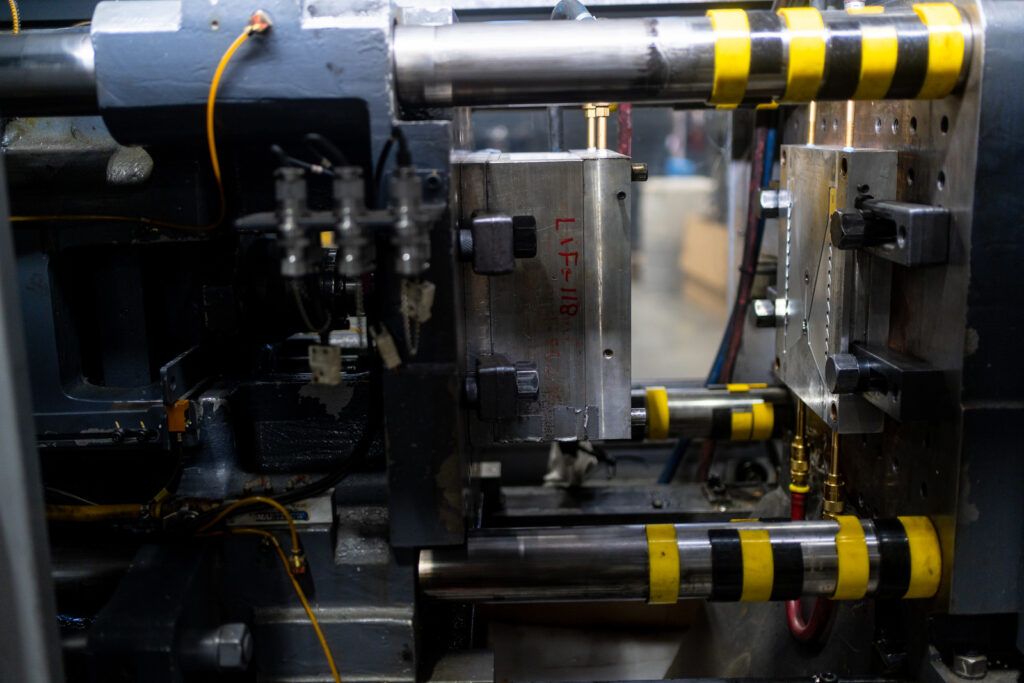
In the 1990s, aluminum molds became a common alternative to steel. They cost less and can be made faster, which helps with smaller production runs and prototypes.
Modern machines hold tight tolerances and produce complex shapes. Manufacturers can now combine materials in a single part.
Materials have advanced too. Manufacturers can choose from plastics built for strength, heat resistance, or chemical resistance, depending on the part’s job.
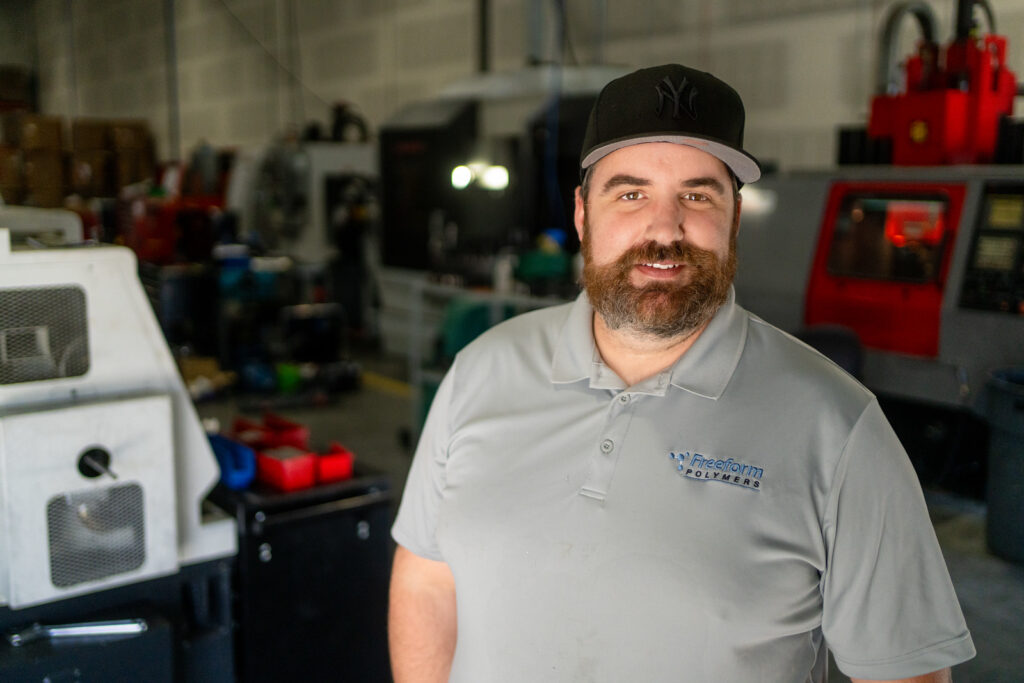
At Freeform Polymers, we apply this modern process in our Logan, Utah facility. If you need a part built to exact specifications, custom injection molding is where that precision comes into play.
Despite 150 years of change, the core process remains reliable. Heat plastic, inject it into a mold, let it cool. That basic idea still works.
Sustainability is shaping where the industry goes next. More manufacturers are working with recycled resins and bio-based plastics to cut waste.
Automation is also advancing. Smart factory tools help manufacturers catch problems earlier and keep quality consistent across large production runs.
The process has come a long way from Hyatt’s plunger machine. Other manufacturing processes we use today have their own long histories worth knowing. See the history of pad printing for another example. If you’re planning a project and want to talk through your options, contact us and request a quote, our team can help!