Not every large plastic part belongs in an injection mold. Some warp during cooling. Some cost more to tool than the finished part can justify. And some simply won’t fill evenly, no matter how good the mold design is.
This guide explains why injection molding isn’t suitable for large parts in certain cases. We’ll show you what breaks down as parts get bigger, and how to spot a design that’s headed for trouble before you commit to tooling.
Size changes the rules of injection molding. Wall thickness gets harder to control. Cooling takes longer and shrinks unevenly. Structural strength can suffer in large, thin-walled shapes. None of these issues rule out injection molding on their own. But together, they explain why some large parts need a different approach.
We’ll walk through the design risks specific to large parts, when strength becomes the real limiting factor, and how to know which process actually fits your part.
Why Is Injection Molding Not Suitable for Large Parts?
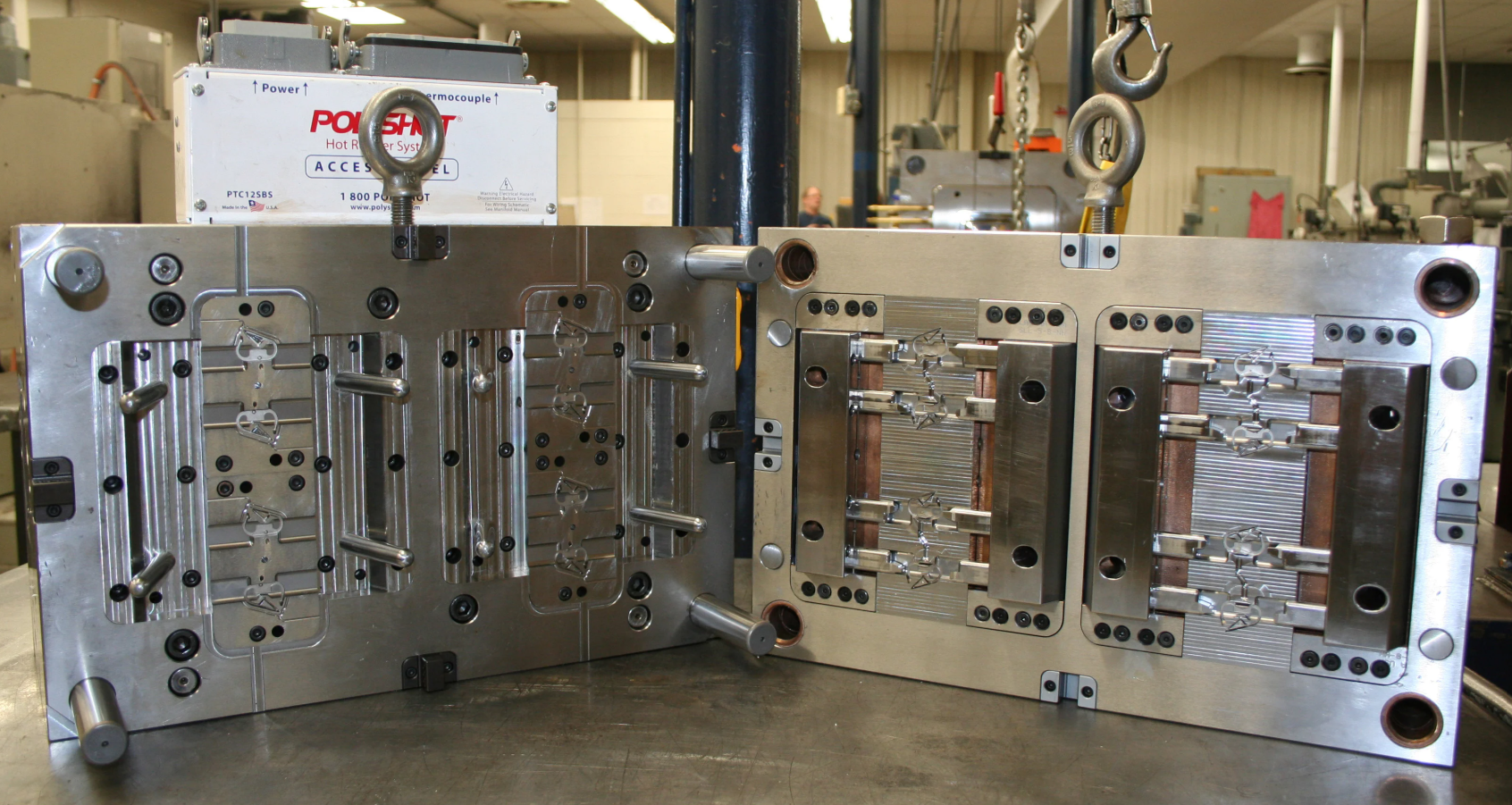
Injection molding can struggle with large parts for a few key reasons. Uneven cooling causes warping, since thick sections shrink at different rates than thin ones. Long flow paths make it harder to fill the mold before the plastic cools, which can leave gaps or thin spots. Large molds also drive up tooling costs fast, sometimes past what the part’s volume can justify. And oversized, thin-walled shapes can lose structural strength without extra support built in.
These issues don’t rule out injection molding on their own. They usually mean the design needs adjusting, the part needs to be split into smaller pieces, or a different process fits better.
Not sure if your part is a good fit? See our small and large part injection molding services.
What Happens When Injection Molding Parts Get Too Large
Bigger parts change how injection molding behaves. Cooling takes longer, and different sections of the part shrink at different speeds. That mismatch is where most large-part problems start.
Wall thickness also gets harder to control. On a small part, a slight variation barely matters. On a large part, that same variation can cause weak spots or visible defects.
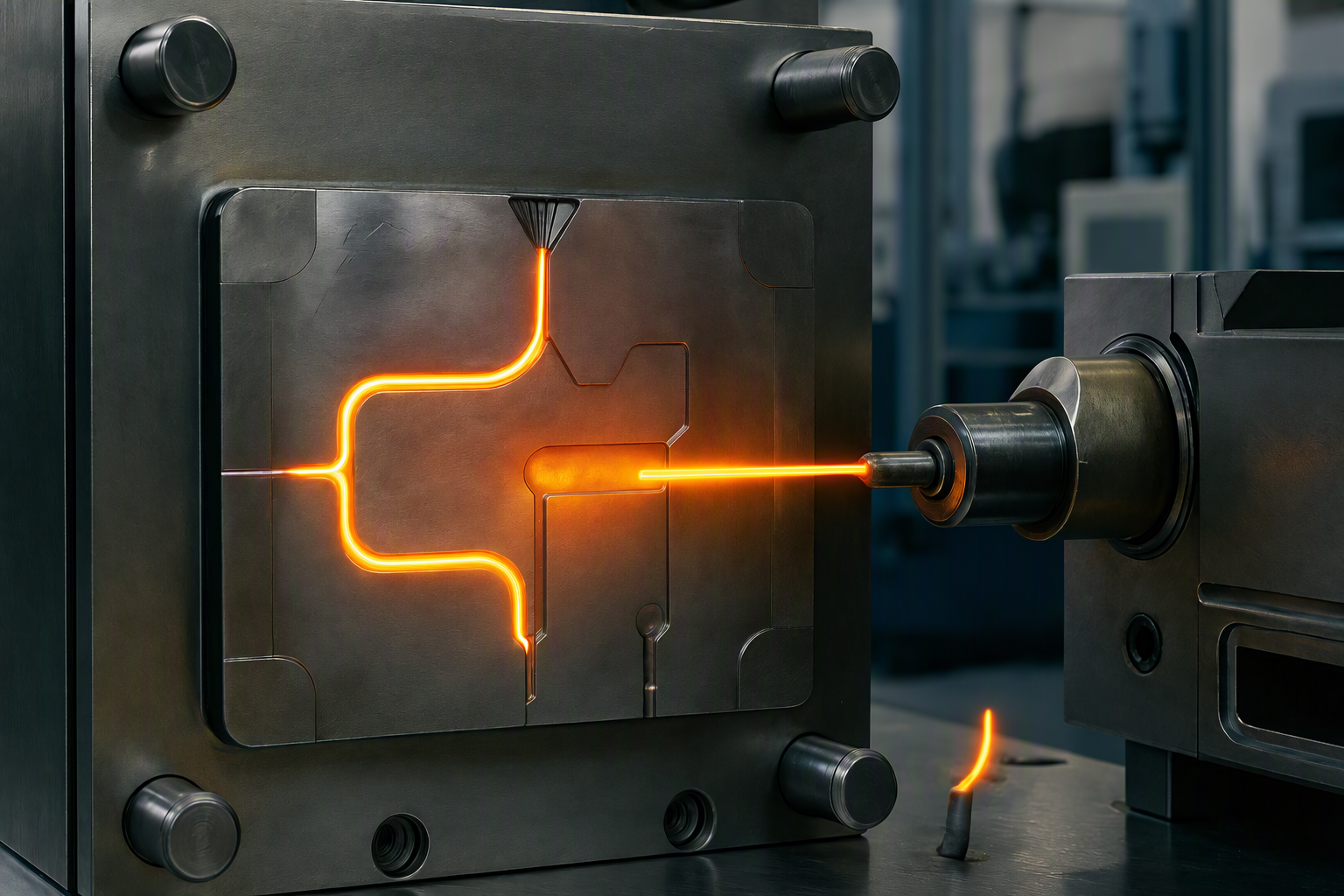
Flow distance adds another challenge. Molten plastic can only travel so far before it cools and stops moving. Large parts with long flow paths run a higher risk of incomplete fills.
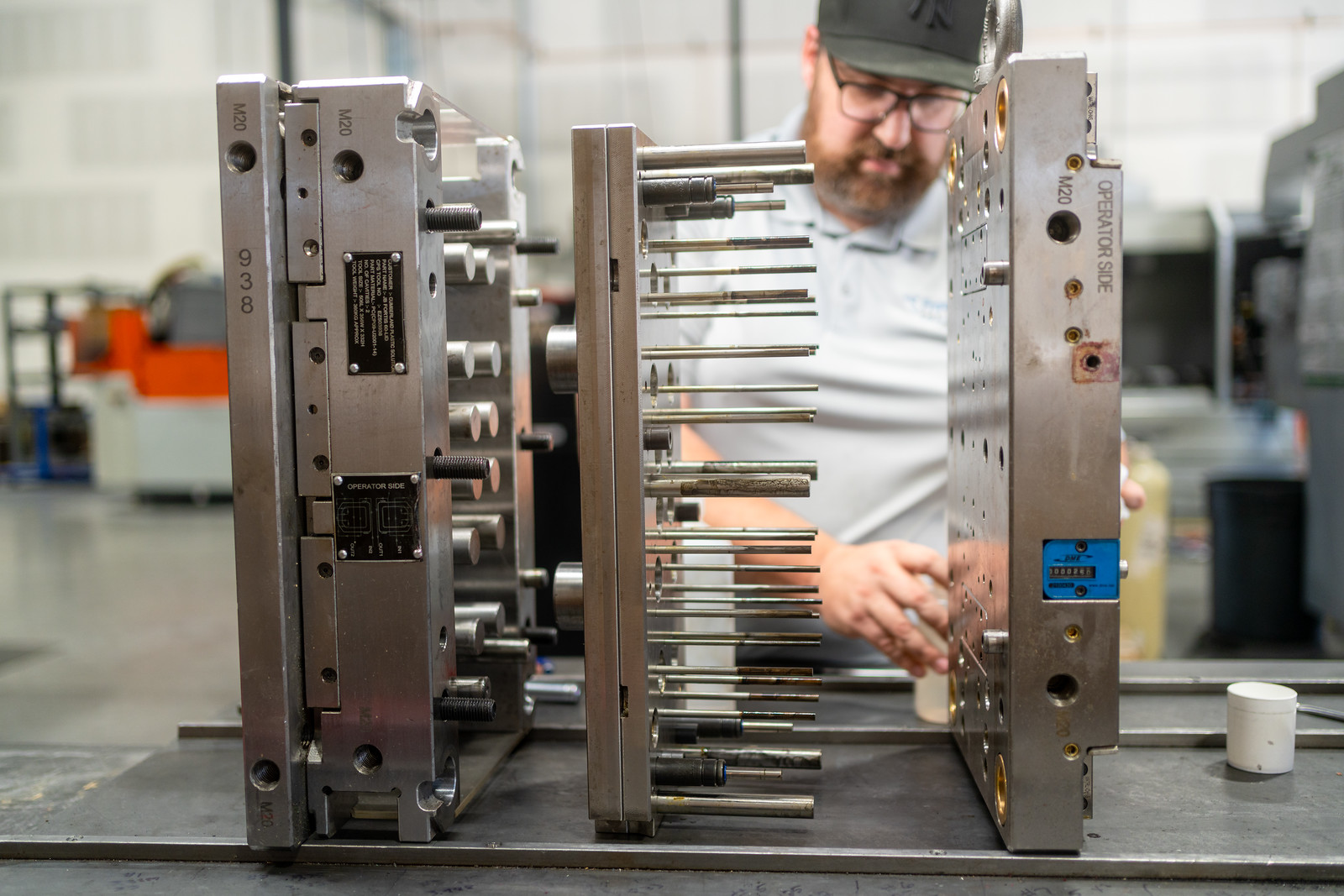
Tooling and press requirements grow fast as parts get bigger. Costs don’t rise in a straight line. For a full breakdown of tonnage and size limits, see our size guide.
Four things tend to work against you as parts scale up:
- Longer cooling times and uneven shrinkage
- Harder-to-control wall thickness
- Longer flow paths and fill risk
- Fast-rising tooling and press costs
We see this range of parts every day at Freeform Polymers, from small precision components to large industrial pieces.
Warping and Sink Marks in Large Parts
Warping is the defect large parts run into most. It happens when different areas of a part cool and shrink at different rates, causing the part to bow or twist out of shape.
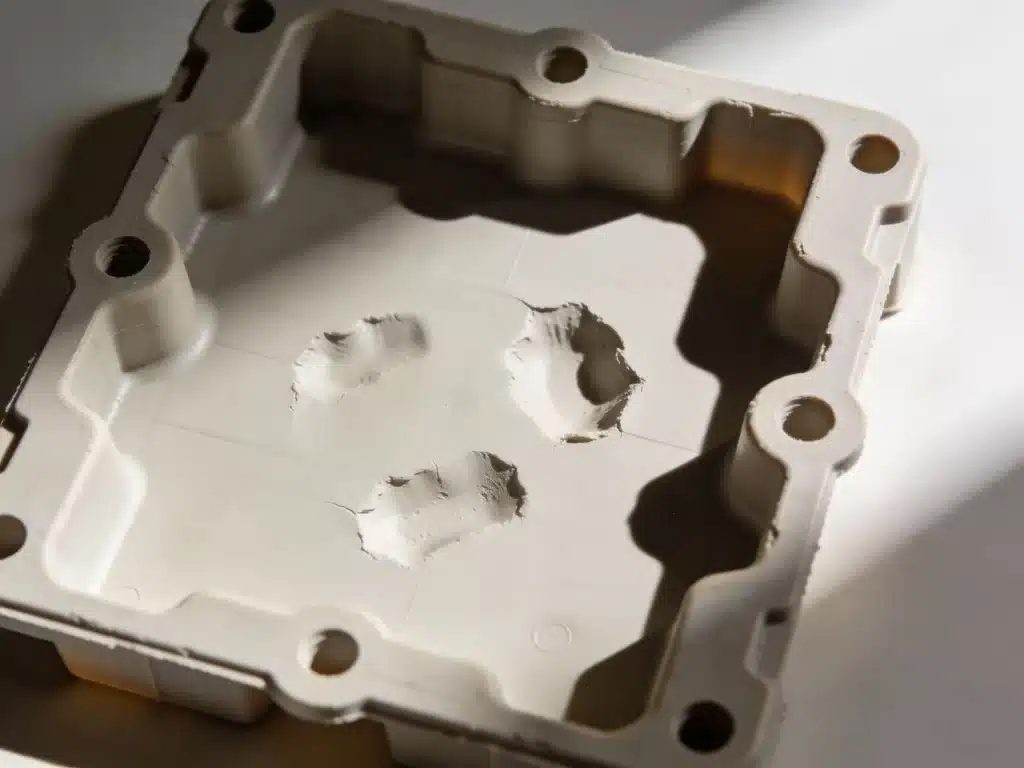
Sink marks show up near thick sections or ribs. As the inside of a thick area cools slower than the surface, it pulls the surface in slightly. On a large, visible surface, that dip is easy to spot.
Good gate placement and cooling channel design reduce these risks. They don’t eliminate them entirely on large parts. Want the full mechanics behind why this happens? Our size guide breaks down cooling and warpage in detail. For a closer look at these and other common defects, see our guide to the most common plastic molding defects.
The best defense is catching these risks in the design phase, before the mold is cut. Watch for:
- Large flat or curved sections with no support
- Thick areas next to thin ones
- Ribs or bosses without proper wall transitions
Structural and Strength Limits in Large, Thin-Walled Parts
Large parts often use thin walls to save material and control weight. That works well at a small scale. Over a large span, thin walls can flex or crack under normal use.
A large flat panel with thin walls has little natural rigidity. Without support, it can bow under its own weight or bend when force is applied. This is different from warping during cooling. It’s a strength problem that shows up after the part is in use.
Ribbing and gusseting add stiffness to large, thin-walled parts. They also add design complexity. Every rib needs the right thickness and placement, or it creates its own cooling and shrinkage problems.
Material choice matters more as parts get bigger. Glass-filled resins add stiffness and strength that standard resins can’t match on their own. The tradeoff is added cost and sometimes tougher tooling requirements. Getting this right early avoids costly redesigns later.
Which Process Fits Your Part’s Problem
Sometimes the fix isn’t a redesign. It’s a different process altogether. The right choice depends on which failure mode your part is running into.
If warping is the main risk, structural foam molding may help. It uses lower clamping pressure and produces more uniform shrinkage across large sections. It does typically call for thicker walls than standard injection molding, so it’s not the best fit if your part depends on staying thin.
If your part is large, simple, and thin-walled, thermoforming can be a better fit. Tooling costs less, though it won’t match injection molding’s fine detail or tight tolerances.
If your part is large and hollow, rotational molding is often the better choice. It builds strength into the walls without the tooling costs of a large injection mold.
If the part’s shape is the real obstacle, splitting it into two molded pieces can solve several problems at once. Smaller molds cost less, and assembly becomes the tradeoff instead of tooling risk.
Our size guide covers each of these alternatives in more detail, including when the cost tradeoffs make sense.
How to Know If Your Part Is Still a Good Fit
Before you finalize a large part design, run through a short checklist. It can save you from an expensive redesign later.
- Are wall thicknesses consistent across the part?
- Can the part handle its expected load without added support?
- Does your production volume justify the tooling cost?
- Have you reviewed the design for warping and fill risk?
A design-for-manufacturability (DFM) review catches these issues before tooling starts. It’s far cheaper to adjust a design on paper than after a mold is cut. Our custom plastic injection molding process includes this kind of review before any steel is cut.
Not sure if your large part is still a good injection molding candidate? Contact us and talk to our team about your part needs today!