How Long Does an Injection Mold Last? Mold Life by Class, Material, and Care
The mold is often the biggest check you’ll write on a plastic part project. So it’s fair to ask how many parts it will give you. Will it cover your…

You design a part to be exactly 100 mm long. The first samples come back at 98.5 mm. Nothing went wrong on the press, and the mold wasn’t built wrong. The plastic did what plastic always does: it shrank as it cooled.
A 1.5% change sounds small. But on a part that has to snap, seal, or slide into place, it decides whether the part fits.
Every thermoplastic gets smaller as it cools from a hot melt to room temperature. How much it shrinks depends mostly on which plastic you choose. This guide gives you the typical shrinkage rate in injection molding for common plastics. It also shows you what makes those numbers move up or down.
First, we’ll explain shrinkage and share a rate chart. Next, you’ll see why some plastics shrink more than others. Then we’ll cover what changes shrinkage on the press and how molders plan for it. By the end, you’ll know what to ask before you pay for a mold.
Most injection molded plastics shrink between about 0.4% and 2% as they cool, and a few grades go higher. The number depends mostly on the type of plastic.
Amorphous plastics like ABS and polycarbonate shrink the least, usually about 0.4% to 0.8%. Semi-crystalline plastics like polypropylene, nylon, and acetal shrink more, often 1% to 2% or higher. That’s because their molecules pack tightly as they harden. Adding glass fiber lowers shrinkage.
Here’s what that looks like. A part with a 1% shrink rate comes out about 1 mm smaller for every 100 mm of length. Molders plan for this by cutting the mold slightly larger than the finished part. Always confirm the exact rate on your resin’s datasheet.
Shrinkage is how much smaller a molded part gets as it cools. Hot plastic takes up more space than cold plastic. When we inject melted resin into the mold, it’s at its biggest. As it cools and hardens, it pulls in and gets smaller.
Percent or inches per inch? Shrink rates show up two ways. Some datasheets use percent, and others use inches per inch (in/in). They mean the same thing: 0.005 in/in equals 0.5%. So a 10-inch part at 0.005 in/in shrinks about 0.05 inches.
You’ll also see two kinds of shrinkage. Linear shrinkage is the change in one direction, like length or width. Volumetric shrinkage is the change in the part’s total size, in every direction at once. The rates in this guide are linear, since that’s what you measure on a finished part.
Most shrinking happens while the part is still in the mold. Once the mold fills, the press keeps pushing in extra plastic to fill the space left as the part shrinks. A little more shrinking happens after the part leaves the mold and finishes cooling.
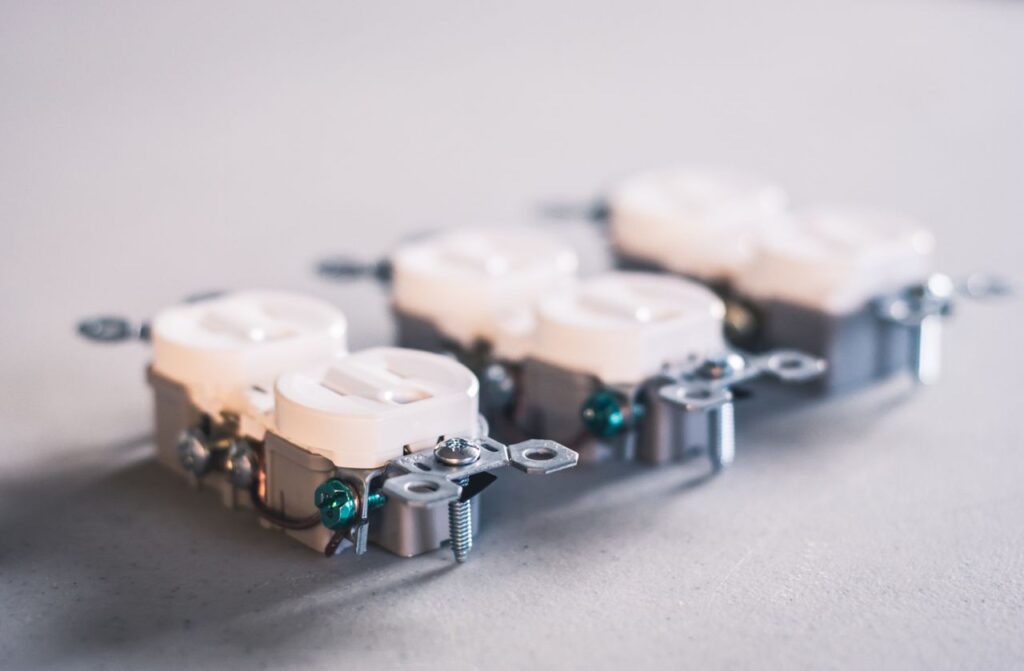
The chart below shows typical shrink ranges for common injection molding plastics. Use it to get a ballpark number before you design a part or ask for a quote instead. Every grade is a little different, so treat these ranges as a starting point.
| Plastic | Structure | Typical Shrink Range | Notes |
| ABS | Amorphous | 0.4%–0.8% | Low, even shrink; common for housings |
| Polycarbonate (PC) | Amorphous | 0.6%–0.8% | Shrinks about the same in every direction |
| PC/ABS | Amorphous blend | 0.5%–0.7% | Blend of PC and ABS; low shrink |
| ASA | Amorphous | 0.4%–0.7% | Similar to ABS; made for outdoor UV exposure |
| Rigid PVC | Amorphous | 0.2%–0.6% | Among the lowest; flexible PVC shrinks more |
| Polypropylene (PP) | Semi-crystalline | 1.0%–2.0% | Wall thickness and press settings move it within the range |
| Nylon (PA66), unfilled | Semi-crystalline | 1.5%–1.8% | Absorbs moisture and grows after molding |
| Nylon (PA66), 30% glass-filled | Semi-crystalline + glass | 0.5%–1.0% | Can shrink up to twice as much across the flow as along it |
| TPU / TPE | Elastomer (rubbery) | TPU about 0.5%–2.0%; TPE varies by grade | Softer TPU grades usually shrink more |
Many plastics shrink a different amount along the flow than across it. Flow is the direction melted plastic travels from the gate. That’s why datasheets often list two numbers for one plastic.
You’ll see different numbers for the same plastic from source to source. Grade, color, fillers, and wall thickness all shift the rate. The datasheet for the exact grade you buy is the final word. Resin makers test shrinkage on a standard molded plaque under ISO 294-4 or ASTM D955.
Not sure which plastic fits your part? Tell us what it needs to do, and we’ll recommend what’s best. Start with our custom plastic injection molding service.
Those numbers aren’t random. They come down to how the plastic’s molecules line up as they cool. Plastic is made of long, chain-like molecules, and the way those chains settle decides how much your part shrinks.
Think of a loose ball of tangled yarn. Now think of laundry folded into tight, neat stacks. The folded stack packs into much less space. Amorphous plastics cool like the yarn, and semi-crystalline plastics cool like the laundry.
| Amorphous | Semi-Crystalline | |
| How the chains settle | Tangled and random | Fold into tight, orderly crystals |
| Typical shrink | Lower, about 0.2%–0.8% | Higher, about 1%–2% or more |
| Shrink by direction | About the same every way | Often different along and across the flow |
| Common examples | ABS, PC, PC/ABS, ASA, rigid PVC | PP, nylon |
Uneven shrink is where trouble starts. When one direction shrinks more than another, the part can bend or twist as it cools. That’s one of the common molding defects like warp and sink.
Fillers change the numbers too. Glass fibers don’t shrink as the plastic cools, so a glass-filled part shrinks less overall. But the fibers line up with the flow, which can make shrink more uneven and add warp. You can read more about fillers and additives in our materials guide.
Resin type sets the starting point. What happens on the press moves the final number. The same plastic can land at the low or high end of its range, depending on these factors:
That’s why a shrink rate is a range, not one fixed number. Where your part lands depends on the part design and the process working together.
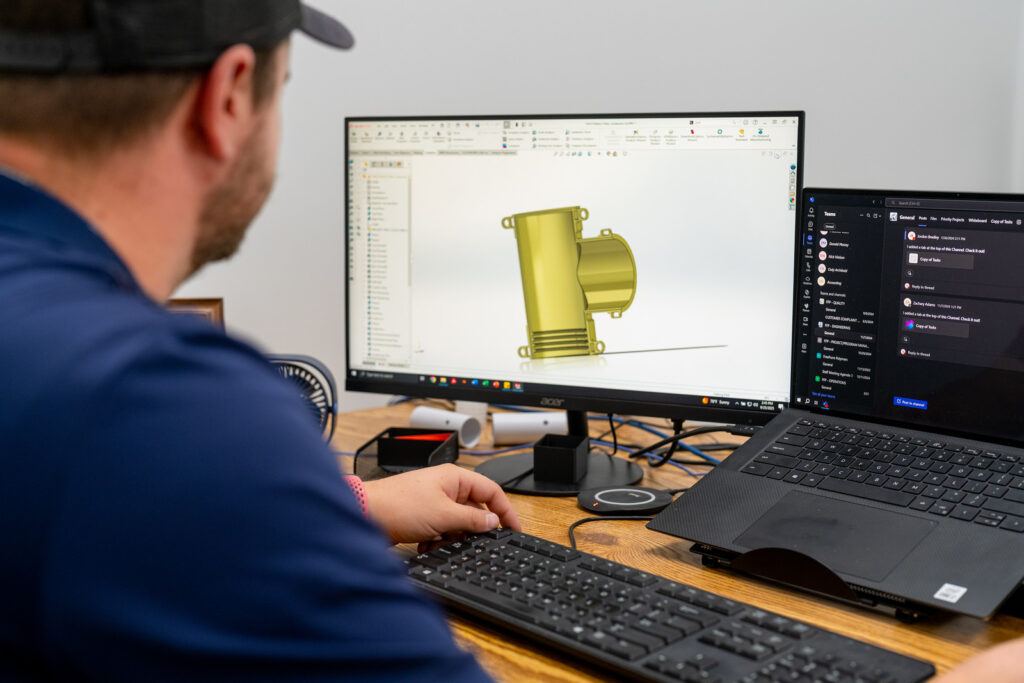
Knowing a part will shrink is half the job. Planning the mold around it is the other half. The fix is simple in concept: cut the mold cavity a little larger than the part you want.
Cavity size = part size ÷ (1 − shrink rate)
Example: You need a 100 mm part in a plastic that shrinks 1.5%.
100 ÷ (1 − 0.015) = 100 ÷ 0.985 = about 101.5 mm
The cavity is cut to about 101.5 mm. As the part cools, it shrinks down to 100 mm.
The shrink rate you pick matters. At 1%, that same cavity would be about 101.0 mm. At 2%, it would be about 102.0 mm. Pick the wrong end of the range, and your part can miss by a full millimeter.
That’s why molds are often built “steel-safe.” This means leaving a little extra steel in the mold at first. Cutting steel away to make room for more plastic is easy. Adding steel back is much harder and costs more.
Good data helps predict shrink before any steel is cut. PvT data shows how a plastic’s volume changes with pressure and heat. Flow simulation software uses that data to estimate how each area of your part will shrink.
Even so, the first parts off a new mold tell the real story. We run a first test sample, called a T1, and check it against your specs. If it doesn’t match, we adjust the mold and sample again.
Most shrink problems can be headed off at the design stage. A few simple choices make your part easier to mold at the size you need. Use this checklist before your design goes to tooling:
Freeform Polymers is an ISO 9001:2015 certified injection molder in Logan, UT. Since 2011, we’ve helped businesses across Northern Utah and Southern Idaho turn designs into parts that fit. When you’re ready, contact us, request a free quote or call us at (435) 774-9090 and get started with your project!