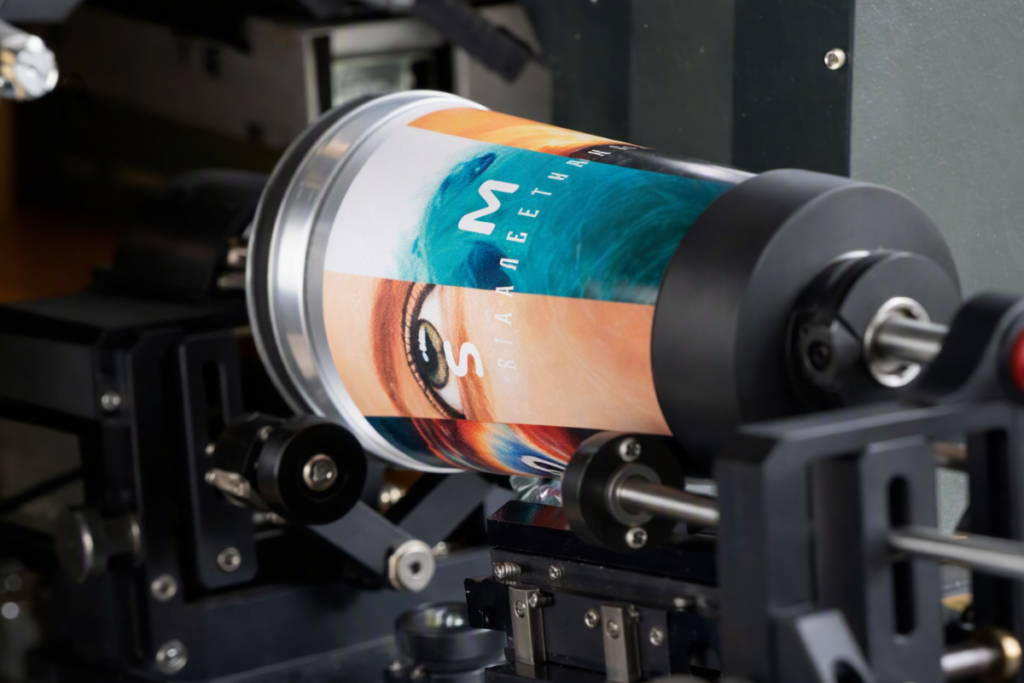
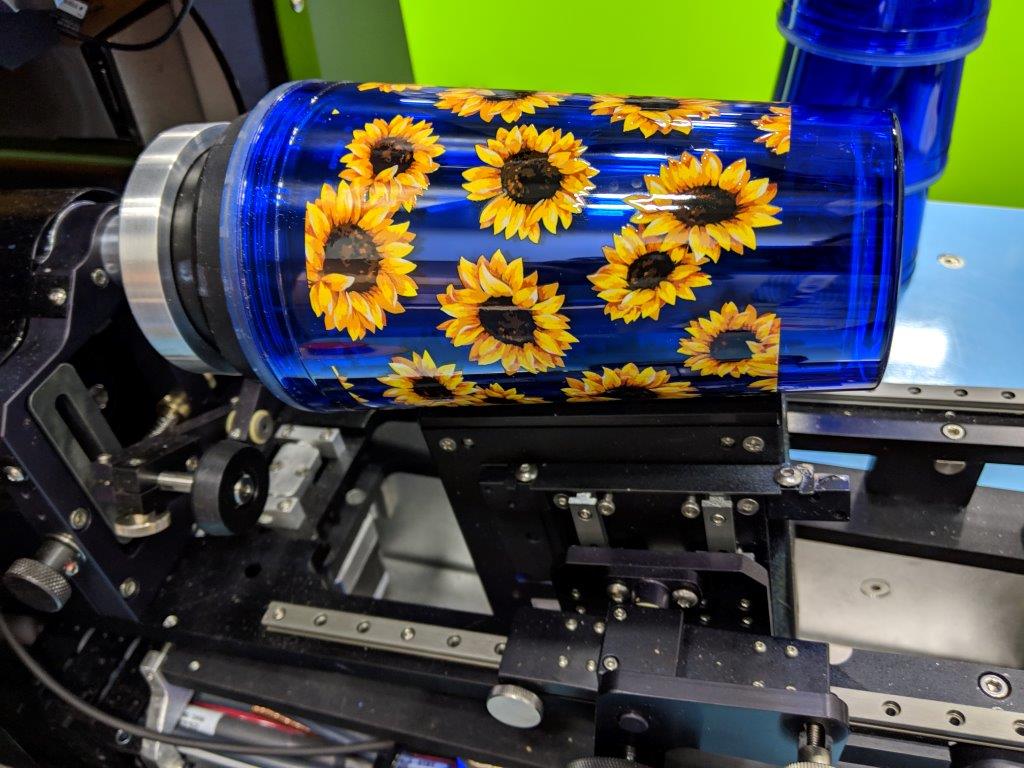
What actually happens when a machine prints a full-color logo onto a curved plastic part, with no plate and no setup delay? That question comes up a lot when customers ask us about digital printing.
At Freeform Polymers, we explain how digital printing works on plastic parts every day. It’s a printing method that skips plates and screens. A machine sends your design straight from a file to the part.
In this article, we’ll walk you through the process step by step. You’ll learn what materials work best with digital printing. We’ll also show you how to decide between digital printing and pad printing for your project.
How Does Digital Printing Work on Plastic Parts?
Digital printing sends your design straight from a computer file to the plastic part. A print head applies ink directly. There’s no plate and no screen to set up first.
Here’s how the process works:
We load your artwork file and position it to fit the part’s shape.
We clean the part surface. Some plastics, like polypropylene, need extra treatment so the ink sticks well.
The print head applies your design in full color, right onto the part.
We cure the print with heat, air, or UV light, depending on the ink.
Because there’s no plate to build, digital printing sets up fast. It works well for short runs, prototypes, and full-color graphics.
Digital printing is a plate-free way to decorate plastic parts. Your design goes straight from a file to the part surface.
Instead of screens or transfer pads, digital printing uses inkjet technology. The print head applies ink in precise, controlled passes.
This method produces full-color, high-resolution graphics. Fine detail and photo-quality images come through clearly.
Digital printing is different from 3D printing. 3D printing builds a part layer by layer. Digital printing only decorates a part’s surface after it’s molded. Read more about 3D printing vs. injection molding if you’re weighing part-making methods.
How the Digital Printing Process Works, Step by Step
Digital printing follows a clear sequence. Each step matters for a clean, durable result.
1. Artwork prep and file setup We start with your design file. We position and scale it to match your part’s shape and size.
2. Surface prep We clean the part first. Plastics like polypropylene have low surface energy, so ink doesn’t stick well on its own. We treat these surfaces with flame or plasma treatment so the ink bonds properly.
3. Ink application The inkjet print head applies your design directly to the part. No plate or screen touches the surface.
4. Multi-color pass registration For multi-color designs, the print head runs several passes. Each pass lines up precisely with the last, so colors stay sharp and aligned.
5. Curing and inspection We cure each print with heat, air, or UV light, depending on the ink type. Then we inspect the part for color accuracy and adhesion.
A quality check at multiple points in the run, not just at the end, helps catch color or adhesion issues early. This keeps parts consistent from the first piece to the last.
What Materials and Parts Work Best With Digital Printing
Digital printing works on a range of plastics. Common choices include:
ABS
Polycarbonate
Polypropylene
Nylon
Acrylic
PVC
Digital printing works best on flat surfaces. Curved, textured, or recessed parts are usually a better fit for pad printing.
This method suits full-color and photo-quality graphics best. If your design has several colors or fine detail, digital printing captures it clearly.
Digital printing also fits short production runs and prototypes. You get sharp, accurate printing without the setup time a plate-based method needs.
Not sure which plastic fits your part? Check our material selection guide before you start your project.
Digital Printing vs. Pad Printing: How the Processes Differ
Digital printing and pad printing decorate plastic parts in different ways. Knowing the difference helps you pick the right method for your project.
Digital Printing
Pad Printing
Setup
Plate-free, file to part
Uses an etched plate
Best part shapes
Flat surfaces
Curved, textured, or recessed surfaces
Cost at volume
Better for short runs
Better for high volume
Pad printing uses a plate to transfer ink onto the part. Making that plate takes time upfront, but it pays off on large production runs. Pad printing also reaches into recessed or textured areas that digital printing can struggle with.
Digital printing skips the plate entirely. That makes it faster to start and more cost-effective for short runs or prototypes.
When to Choose Digital Printing for Your Project
Digital printing is a strong fit for certain projects. Here’s when we recommend it:
You need a short run or a prototype batch.
Your design uses full color or photo-quality detail.
You need a fast turnaround without plate lead time.
If your project fits this list, digital printing may be your best option. Contact us, get a printing quote and we’ll help you decide.
Should your part be plastic or metal? That question decides whether you need injection molding or die casting. Both processes push melted material into a mold under pressure. From across…
Is it cheaper to build your mold overseas or here at home? The honest answer depends on what you actually count. Many buyers compare domestic vs overseas injection molding using…
You have a part to make. Someone mentioned CNC turning or CNC milling. Maybe both came up. They sound alike, but they are not the same process. Picking the wrong…
You’ve probably seen the letters “ISO 9001:2015” on a badge or a website. It might look like just another logo. But it means something specific. ISO 9001:2015 certification tells you…
If you’ve gotten quotes from two injection molding companies, you may have noticed something. One mentions a hydraulic machine. The other mentions an electric machine. You might wonder if that…
Combining metal with plastic takes a different process than adding a soft grip to a hard plastic part. Both are common in insert molding and overmolding, but they solve different…
Not all injection molds are built the same way. At Freeform Polymers, we’ve seen how the type your part needs can change your tooling cost by thousands of dollars. That…
Ever gotten a design review back with a flag that says “insufficient draft”? You had no idea what that meant. It’s one of the most common notes molders give on…