Plastic Injection Molding vs. Die Casting: What’s the Difference?
Justin Brown
September 17th, 2026
Should your part be plastic or metal? That question decides whether you need injection molding or die casting.
Both processes push melted material into a mold under pressure. From across the shop floor, they can look almost the same. The material inside changes almost everything else, including cost, strength, and how precise your part can be.
This guide compares plastic injection molding vs die casting on process, cost, materials, and precision. You’ll see what each process does well, and where it falls short.
We’ll walk through how each process works. Then we’ll compare them side by side. By the end, you’ll know which process fits your project best.
What’s the Difference Between Plastic Injection Molding and Die Casting?
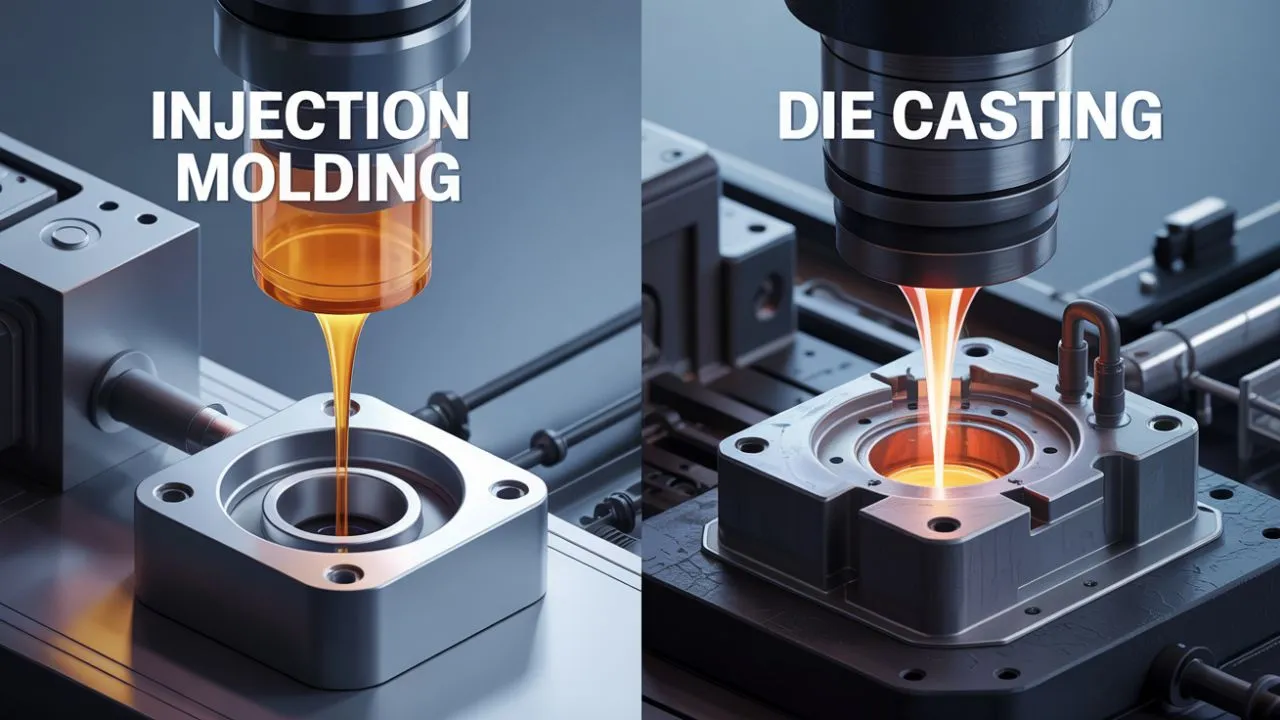
Injection molding and die casting both push melted material into a mold to form a part. The material is different. Injection molding uses melted plastic. Die casting uses molten metal, usually aluminum or zinc.
Plastic melts at a lower temperature than metal. Because of this, injection molds can be built from aluminum or steel. Die casting needs much higher heat and pressure. Its molds are built from hardened steel, and they cost more to build.
Die casting makes stronger, heavier parts. These parts suit structural or heat-resistant uses. Injection molding makes lighter, less expensive parts. It also gives you more design and color choices.
Your part’s strength needs, weight limits, and budget decide which process fits.
The short answer is the material. Injection molding shapes plastic. Die casting shapes metal. That single choice sets nearly every other difference between the two.
Both processes follow the same basic steps. Melt the material, push it into a mold, let it cool, then eject the part. The mold does the real work in each case.
Plastic melts at a much lower temperature than metal. This gap in heat changes the pressure needed, the mold material used, and how the build cost compares. It also shapes what each process is best suited for.
The sections below walk through each process on its own. Then we’ll put them side by side.
How Die Casting Works
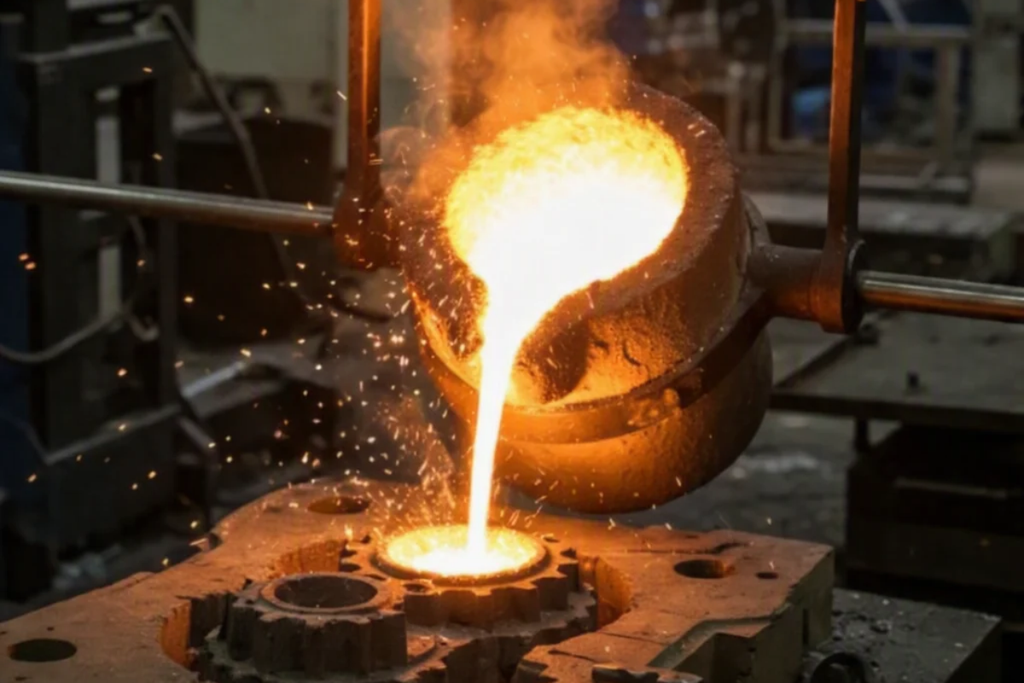
Die casting is a metal manufacturing process. It uses molten metal, not plastic, so it falls outside what we do at Freeform. Here’s a plain look at how it works.
Die prep. The steel mold, called a die, is closed and clamped shut.
Filling. Molten metal is forced into the die under high pressure.
Cooling. The metal cools and hardens inside the die.
Ejection. The die opens, and the finished part is pushed out.
Die casting most often uses aluminum, zinc, or magnesium. These metals melt at high temperatures. Because of this, die casting dies are built from hardened tool steel.
Die casting only works with metal. If your part needs to be plastic, injection molding is the process to use.
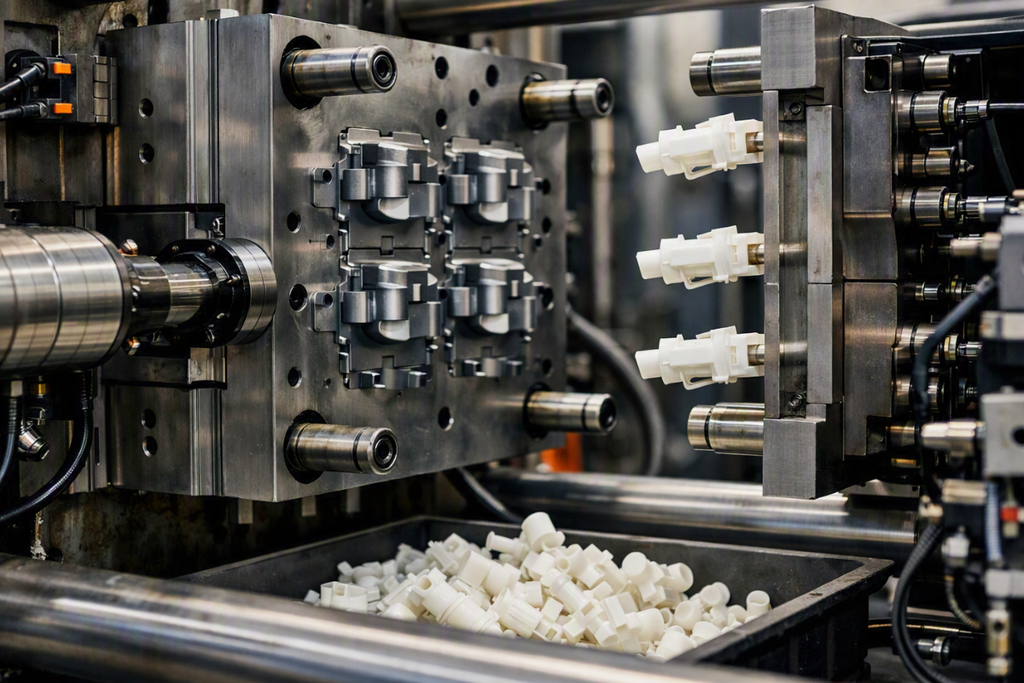
Filling. Melted plastic is injected into the mold under pressure.
Cooling. The plastic cools and takes the shape of the mold.
Ejection. The mold opens, and the finished part is pushed out.
We work with plastics like polypropylene, ABS, nylon, and polycarbonate. Each one brings different strength, flexibility, and cost to your part. Choosing the right plastic material matters as much as choosing the right process.
Die Casting vs. Injection Molding: Key Differences
Injection Molding
Die Casting
Material
Plastic (PP, ABS, nylon, PC, and more)
Metal (aluminum, zinc, magnesium)
Standard Tolerance
Down to ±0.005 in.
Tight tolerances possible, but process-dependent
Surface Finish
Smooth, paint-ready, wide color range
Strong finish, often needs extra machining
Tooling Cost
Lower upfront cost
Higher upfront cost
Best For
Housings, consumer parts, design flexibility
Structural or heat-resistant metal parts
Plastic molds cost less to build because plastic melts at a lower temperature. Metal dies need hardened steel to survive the heat and pressure of die casting. Curious why tooling costs so much either way? See why plastic injection molds cost so much.
Injection molding gives you more color and design freedom. Die casting gives you more strength and heat resistance. Your part’s job decides which one wins.
When to Use Each Process
Die casting fits parts that need metal strength. Structural brackets, automotive hardware, and load-bearing parts often call for it.
Injection molding fits parts that need design flexibility. Housings, consumer products, and parts needing specific colors are a good match.
We serve industries that need plastic parts, including automotive, medical, and consumer product companies. If your part can be plastic, injection molding likely gets you there faster and at a lower cost.
Which Process Is Right for Your Project?
A few questions can point you to the right process. Start with your part’s job.
Does your part need metal strength, or will plastic hold up?
How much does weight matter for your application?
What’s your budget for tooling?
What production volume are you planning?
Some parts need metal no matter the cost. Parts exposed to high heat, heavy mechanical load, or electrical shielding often require it. If your part fits that description, die casting is worth exploring elsewhere.
Most parts don’t need that level of strength. If plastic can do the job, injection molding usually costs less and gives you more design freedom.
If plastic fits your part, we can help. Contact us, request a free quote and tell us about your project.
FAQ
Is die casting the same as injection molding? No, die casting and injection molding are different processes. Die casting uses molten metal. Injection molding uses melted plastic. Both push material into a mold, but the material changes the process, cost, and end result.
Is die casting cheaper than injection molding? No, die casting tooling generally costs more than injection molding tooling. Metal dies need hardened steel to handle higher heat and pressure, which raises the upfront cost.
Can plastic be die cast? No, die casting only works with metal, usually aluminum, zinc, or magnesium. If you need a plastic part, injection molding is the process to use.
Should your part be plastic or metal? That question decides whether you need injection molding or die casting. Both processes push melted material into a mold under pressure. From across…
Is it cheaper to build your mold overseas or here at home? The honest answer depends on what you actually count. Many buyers compare domestic vs overseas injection molding using…
You have a part to make. Someone mentioned CNC turning or CNC milling. Maybe both came up. They sound alike, but they are not the same process. Picking the wrong…
You’ve probably seen the letters “ISO 9001:2015” on a badge or a website. It might look like just another logo. But it means something specific. ISO 9001:2015 certification tells you…
If you’ve gotten quotes from two injection molding companies, you may have noticed something. One mentions a hydraulic machine. The other mentions an electric machine. You might wonder if that…
Combining metal with plastic takes a different process than adding a soft grip to a hard plastic part. Both are common in insert molding and overmolding, but they solve different…
Not all injection molds are built the same way. At Freeform Polymers, we’ve seen how the type your part needs can change your tooling cost by thousands of dollars. That…
Ever gotten a design review back with a flag that says “insufficient draft”? You had no idea what that meant. It’s one of the most common notes molders give on…